[
00:00:00]
[
00:00:00] Ricardo Belmar: Welcome to our new Retail Razor show, Blade to Greatness, our new standalone Retail Razor show, where we hear from a retail industry leader who shares their sharp insights and cuts of wisdom on how to excel in this dynamic and competitive field. In this series, we learn about the essential must have skills and qualities that every retail executive needs to lead their teams and their business to success.
[
00:00:30] Casey Golden: Whether we're talking about HQ or stores, we'll uncover valuable tips and advice that every retail leader can apply to their own retail career path, raising your Blade to Greatness.
[
00:00:42] Ricardo Belmar: I'm your host, Ricardo Belmar.
[
00:00:44] Casey Golden: And I'm your co host Casey Golden.
[
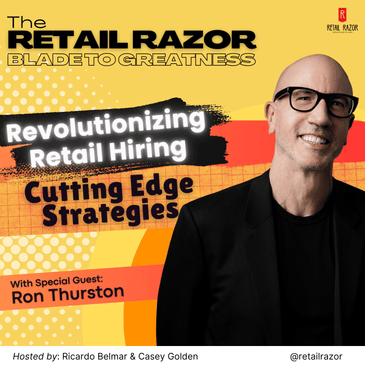
00:00:46] Casey Golden: Today we'll be speaking with Ron Thurston, co-founder of Ossy, bestselling author of Retail Pride, podcast host, speaker, advisor, and board member. Ron leverages his extensive experience leading [
00:01:00] retail operations for America's most prominent brands to bring attention to the issues facing frontline retail workers and retail leaders today.
[
00:01:09] After releasing his book, Retail Pride, and launching the Retail in America Tour and podcast, Ron has co-founded Ossy to disrupt how the retail industry hires, engages, connects retail workers with retail brands and technology providers.
[
00:01:25] Ricardo Belmar: Today he's here to talk to us about one of the most important skills a retail leader needs to master. How to reframe your current job search processes to hire the right person. Let's listen to what he has to share with us.
[
00:01:37] Casey Golden: Welcome Ron.
[
00:01:38] Ron Thurston: Thank you so much Casey. I really, I appreciate this opportunity to talk about my favorite topic, which is people in retail.
[
00:01:47] This is a topic that I am incredibly passionate about because nothing in retail exists without great people. And whether it's great technology in stores, whether it's great store [
00:02:00] design, whether it's incredible product, nothing happens without great people in stores.
[
00:02:04] And I know the first topic we wanted to speak about was really how to attract and change the way brands have looked for great candidates, what the job search looks like. So I'll just give you a few highlights and share why we started Ossy. So launching this fall the real idea here is that the search for candidates and how we've staffed in retail hasn't really changed much in a decade.
[
00:02:32] And so as the industry has evolved, as technology has evolved, and really as the candidate base has changed we really think about this as the entire, a new way to search. And so that would include things like a resume review, like, coaching to be the, an exceptional candidate about providing resources and tools and training on career advancement.
[
00:02:57] And so when the idea here is to [
00:03:00] have the largest database of highly qualified and most importantly, engaged candidates, to work in retail because where it has fallen apart is this idea of, " oh, I'm just gonna post a job on Indeed or LinkedIn or on my company platform," and people are just going to come to me and the level of engagement in that process is actually quite low.
[
00:03:26] The level of disappointment is very high. The response rates for those applications is really low. So the idea here is high touch service with highly engaged candidates and retailers posting open jobs from in sales, leadership roles, multi-store leadership roles, but very much a focus on the field is how we will change the way the industry works. And it, it's because, this, it's the missing link of how to connect those great people [
00:04:00] with those jobs. There's no forum to do that today. And again, we've kind of said, oh, go walk the mall, or I'm sure you know people on LinkedIn, or I'll post the job on LinkedIn, or I'll post it in other job sites. It, I hear every day from retailers, I hear every day from candidates, it doesn't work, yet there been a new solution. So that's really about reframing and changing the way that we attract talent into the industry.
[
00:04:30] Ron, it seems like part of the problem here has been that while there have been, I would say many technology-based solutions for hiring in general, the fact is that the needs that retailers have for hiring, particularly for those frontline teams, are actually quite different than what I'd say the normal , office-based job position, for example.
[
00:04:49] Ricardo Belmar: And so the process shouldn't really be treated the same. And so if you'll try to apply a technology solution that's built for that model, it doesn't really work here, does it?
[
00:04:57] Ron Thurston: You're exactly right Ricardo. And the [
00:05:00] reason for that is because field-based roles require exceptional emotional empathetic curiosity. Things I write about in Retail Pride, there's such a human element to this. And it also then, it doesn't require a certain level of education. It doesn't require certain things that may fit into a traditional corporate role.
[
00:05:22] So you're interviewing not only for skill and competencies, but you're interviewing for culture fit and kind of personality, if you will, and their ability to create leaders and be able to lead others as well as the ability to literally speak to strangers all day long. And that's something that doesn't show up on a resume.
[
00:05:44] So there has to be much more of a human element. It can't be, AI searches have determined that you're a good fit. You may actually not have the resume that would make you an exceptional fit for the job. It actually takes great recruiting [
00:06:00] skills and a great hiring manager to make those decisions.
[
00:06:03] Casey Golden: I think that's a really, It's a really interesting point. At the end of the day, a retail position doesn't really fit on a form or fields. The words that you might expect to be used in a resume, it's much more like accomplishments and tasks. Whereas the soft skills and the people skills and how they work it, it doesn't fit, it doesn't really fit on a resume, and there definitely needs to be that.
[
00:06:34] A different way to even look at candidates.
[
00:06:39] Ron Thurston: Right, and I think it's also changing the language that we use and what a great candidate would be. And so it's aligning the competencies of the, of what the retailer expects the job to look like and the competencies that the candidate possesses and that we match it, and we use the same language. so [
00:07:00] every brand has its own. what they deem successful competencies and skills.
[
00:07:05] Yet there can be a mismatch in how the candidate describes their own skillset. And if we say, well, let's talk about kind of leading with empathy. What does that mean for this retailer? And what does leading with empathy mean for the candidate? And are you actually communicating about the same thing?
[
00:07:22] You just don't know how to do that. It's where we're building that with Ossy is very much like, let's make this introduction. Let's introduce you to all the best, highly engaged candidates who also understand the language used to be a good candidate and to, it actually saves ultimately a lot of work on the retailer side to have all this conversation done in advance.
[
00:07:47] So that, that's why I'm excited. It's consistent. It's very engaged. It's very active in its search. And kind of your point earlier, Ricardo, the way that the industry has also changed is that [
00:08:00] headcount in stores is lower. It is lower in 2023 than it has been. It doesn't mean that there's fewer stores, but there is in many cases less payroll being invested.
[
00:08:11] And I understand that as a former head of stores, like why we do that. But what happens is then the headcount goes down, the skillset needs to go up because the workload didn't change. In fact, the workload's higher, the revenue and traffic is equal or higher. Yet we have fewer people doing the work. And so for me that it looks like an opportunity to then really, have the best people I can possibly have, even though there are fewer of them than I did before.
[
00:08:42] So there's a balance of head count versus average hourly rates and cost. That I think that's an important future of thought for the industry.
[
00:08:51] Ricardo Belmar: Yeah. Absolutely. That's an excellent point. All excellent points about how things need to change. Well, Ron, thank you so much for sharing your thoughts with us on [
00:09:00] this point today. I think this is a lot of great information that every retail leader and hiring manager of store teams needs to consider.
[
00:09:06] Ron Thurston: Great. Thank you so much, Ricardo and Casey.
[
00:09:08] Casey Golden: Thanks Ron.
[
00:09:09] Casey Golden: if you've enjoyed our show, please consider giving us a five star rating and review on Apple podcasts and Goodpods. Remember to smash that subscribe button in your favorite podcast player and tune in on YouTube, so you don't miss a minute.
[
00:09:23] I'm your cohost, Casey Golden.
[
00:09:26] Ricardo Belmar: Please share your feedback with us on Twitter at Casey C Golden, Ricardo underscore Belmar, and at RetailRazor, or find us on LinkedIn, Threads, and Instagram. For the best highlights from each episode, shipped straight to your inbox, subscribe to our substack newsletter for full episode transcripts and bonus content.
[
00:09:42] I'm your host, Ricardo Belmar.
[
00:09:44] Casey Golden: Thanks for joining us.
[
00:09:46] Ricardo Belmar: Until next time, keep cutting through the clutter and stay sharp.
[
00:09:49] This is the Retail Razor Blade to Greatness.