
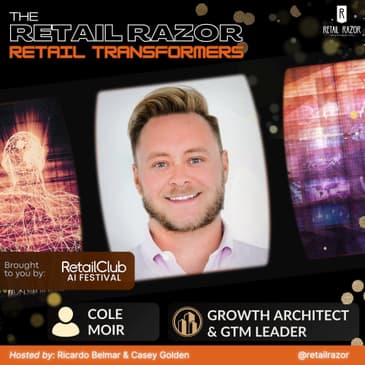



Cole Moir on what replaced the CMO role - the four hires that matter, and how he'd manage budget for a $200 million brand.
31% of Fortune 500 companies don't have a CMO role right now. Starbucks, Walgreens, and General Motors are three of them.
That number is the cleanest way to describe what's happened to the CMO role.
Cole Moir has spent close to 20 years inside the shift. He led brand marketing at TCL, where the company became the fastest-growing consumer electronics brand two years running. Before that, Samsung, Sony Entertainment, and Motorola. Before that, agency years at Ogilvy, Edelman, and 360i. He has owned the NFL relationship, partnered with Olympic athletes, and run Call of Duty campaigns.
Ricardo Belmar and Casey Golden put the obvious question to him. If the CMO role keeps getting renamed or removed, what takes its place? This is Season 2, Episode 8.
Cole's answer is an AI marketing organization that looks nothing like the org chart most companies run today. Small always-on strategy teams. Cohorts of five to twenty agents doing tactical work. Four roles carrying the entire function. And the people who last are the ones who can look at infinite AI-generated creative and say which piece is any good. Cole calls that taste. He thinks it's the scarcest skill in marketing.
Then Casey put a number on the table. $200 million brand. How would you budget marketing? Cole answers with real percentages, then adds a warning: spend under 25% in the upper and mid funnel and you'll pay for it inside two years.
We also get the partnership math nobody publishes. Only 5% of NFL fans have ever been to a game. 95% watch at home, on their own TV or a friend's. Of the 100 most-watched TV shows over the past decade, 96 are football. That's how a challenger TV brand builds the case for an NFL deal.
Cole closes with a single question that tells you whether your AI marketing organization is real: if AI disappeared tomorrow, would your system break, or would everyone go back to what they were already doing?
What You'll Learn in This Episode.
Why 31% of the Fortune 500 has no CMO, and which titles absorbed the CMO role.
Why the next CEO is more likely to come out of marketing than sales.
The four roles Cole says every marketing team needs, and the two he'd stop hiring for.
How an AI marketing organization gets staffed, from agent cohorts to human-in-the-loop.
How to split a $200 million budget across upper funnel, conversion, and testing.
The 25% floor Cole says you can't drop below without paying for it later.
How NFL and Olympic partnerships get evaluated before anyone signs anything.
The two influencer groups that will matter, and why last-click kills the case for both.
Brand lift studies, messaging pull-through, and MMM as the influencer scorecard.
How AI changed creator discovery, and why Cole writes influencer contracts in two parts.
The three skills he'd tell a 25-year-old marketer to build, and the two habits to drop.
Cole's one-question test for whether AI is integrated or decorative.
Whether you lead a global retailer or a growing brand, this episode will leave you looking in the mirror and rethinking what retail transformation really requires from you as a leader.
Support our sponsors.
This Episode is Brought to You By RetailClub.
Join 2,000 retail leaders at RetailClub AI Festival, September 22–24 in Huntington Beach. Dive deep into how AI is reshaping retail while soaking up the sun at a fully outdoor, beachside venue. Decision-makers from retailers and brands can attend with free tickets and up to $1,250 in travel reimbursement. Head to retailclub.com to learn more. https://retailclub.com/retail-razor-podcast
Subscribe & Follow.
Don't forget to like, comment, and subscribe to The Retail Razor: Retail Transformers for more episodes featuring retail innovators, disruptors, and bold thinkers reshaping commerce.
Subscribe to the Retail Razor Podcast Network: https://retailrazor.com/
Subscribe to our Newsletter: https://retailrazor.substack.com
Subscribe to our YouTube channel: https://go.retailrazor.com/utube
About Our Guest.
Cole Moir. https://www.linkedin.com/in/colemoir/
Cole Moir is a growth architect who turns culture into commerce.
Over nearly two decades at Ogilvy, 360i, and Edelman, and with brands like Samsung and Motorola, he's helped companies compete in crowded categories and win. Most recently, as VP of Brand and Digital Marketing at TCL North America, he led brand, digital, eCommerce, and performance strategy for the fastest-growing TV brand in the US for two consecutive years, backed by partnerships with the NFL and the International Olympic Committee.
From the Oscar Mayer bacon dating app to the Motorola Razr relaunch and next-generation SQD-Mini LED innovation, his focus has never changed: helping brands punch above their weight and take outsized market share. Today, he's deep-diving into AI and advising growth-stage brands.
Chapters.
(00:00) Teaser
(00:53) Show Intro
(04:33) Welcome Cole Moir
(07:29) AI and CEO Expectations
(08:20) CMO to CEO Pipeline
(09:36) Guest Career Background
(10:37) Future Marketing Org Design
(13:33) Hiring for New Roles
(14:55) Big Brand Partnerships
(19:08) Measuring Partnership Impact
(20:19) Influencer Marketing Evolution
(24:12) AI for Creator Discovery
(27:09) Influencer Measurement KPIs
(29:50) Budget Allocation Across Channels
(32:39) Budget Split Strategy
(35:16) Attribution and Geo Tests
(36:52) Agentic AI Org Design
(38:40) Skills for Future CMOs
(41:01) AI Predictions and Creative
(45:25) Taste and AI Integration
(48:06) Show Close
Meet Your Hosts.
Helping you stay sharp, be bold, and transform retail:
Ricardo Belmar is an NRF Top Retail Voice for 2025 and a RETHINK Retail Top Retail Expert from 2021 – 2026. Thinkers 360 has named him a Top 10 Thought Leader in Retail, a Top 25 Thought Leader in AGI and Careers, a Top 50 Thought Leader in Agentic AIand Management, and a Top 100 Thought Leader in Digital Transformation and Transformation. Thinkers 360 also named him a Top Digital Voice for 2024 and 2025. He is an advisory council member at George Mason University’s Center for Retail Transformationand the Retail Cloud Alliance. He was most recently the partner marketing leader for retail & consumer goods in the Americas at Microsoft.
Casey Golden, is the North America Leader for Retail & Consumer Goods at CI&T, and CEO of Luxlock. She is a RETHINK Retail Top Retail Expert from 2023 - 2026, and Retail Cloud Alliance advisory council member. After a career on the fashion and supply chain technology side of the business, Casey is obsessed with the customer relationship between the brand and the consumer and is slaying franken-stacks and building retail tech!
Episode Music.
Includes music provided by imunobeats.com, featuring Tropikool, from the album Future Beats 2, plus Virtual Apology and New Styles, from the album Shimmer Pop, written by Heston Mimms, published by Imuno.
Highlight Clips.
[00:14:15] - I think there needs to be a head of content, which is really gonna be responsible for scale and storytelling. And then I think…
[00:38:57] - It's super easy. The the top three things that I would always give somebody is, one, learn data. Data is important for me. It's…
Transcript.
S2E8 Cole Moir
[00:00:00] Teaser
[00:00:01] Casey Golden: 20 years ago, CMOs built brands. Today, they're expected to build businesses
[00:00:06] Ricardo Belmar: Who's actually running the business today, the CEO or the CMO?
[00:00:10] Casey Golden: The modern CMO isn't just buying media and approving campaigns anymore.
[00:00:15] Ricardo Belmar: Our guest has spent nearly 20 years doing exactly that, helping build some of the biggest brands in consumer technology.
[00:00:21] Casey Golden: Samsung, Motorola, TCL, and he's asking the same questions the rest of us are. What does marketing even look like in 2027?
[00:00:31] Ricardo Belmar: How many AI agents will your marketing team have next year? Grab a notebook. This isn't a marketing episode.
[00:00:37] Casey Golden: It's a masterclass in modern leadership.
[00:00:40] Ricardo Belmar: Now let's meet our latest retail transformer, Cole Moir.
[00:00:53] Show Intro
[00:00:53] Ricardo Belmar: Welcome to Retail Transformers, candid conversations with the visionaries shaping the future of commerce.
[00:00:59] I'm [00:01:00] Ricardo Belmar.
[00:01:00] Casey Golden: I'm Casey Golden.
[00:01:01] Welcome back, Retail Razor fans. We're here to cut through the clutter to bring you the sharpest insights from the leaders redefining retail, consumer brands, and the future of business.
[00:01:12] Ricardo Belmar: Casey, I think we can all agree marketing has had quite the identity crisis over the last decade.
[00:01:18] Casey Golden: That's putting it lightly. We went from debating billboards and banner ads to talking about AI agent, creator economies, retail media networks, and whether your refrigerator should have a personality.
[00:01:34] Ricardo Belmar: 'Cause that's what everybody needs, right? A refrigerator with a personality. Well, given today's guest's background in consumer electronics, uh, that might not be that far away.
[00:01:45] Casey Golden: Right? Because today's CMOs aren't just marketers, they're operators. They're expected to drive growth, shape culture, influence product strategy, and create customer experiences that span digital, physical retail, and [00:02:00] everything in between.
[00:02:00] Ricardo Belmar: And that's exactly why we're excited about today's conversation. Our guest has spent nearly, what, two decades now leading marketing from some of the world's most recognizable consumer technology brands, from Samsung to Motorola, and most recently TCL. He's helped shape how millions of consumers discover, engage with, and ultimately buy technology.
[00:02:22] Casey Golden: Along the way, Cole has led major partnerships with organizations including the NFL, the Olympic Games, and Call of Duty, proving that great marketing isn't just about impressions and clicks. It's about creating moments that consumers remember.
[00:02:40] Ricardo Belmar: And here's what makes today's conversation particularly interesting. For the first time in nearly 20 years, Cole joins us at a transition point in his career, bringing a perspective that's equal parts operator, strategist, and futurist.
[00:02:54] Casey Golden: Yeah. So today we're skipping the corporate talking points. We're [00:03:00]talking about what CEOs get wrong about marketing, revealing how much brands should actually be spending on social media, and talking openly about AI, influencers, media, and whether the traditional marketing organization is built for what's coming next.
[00:03:18] Ricardo Belmar: And of course, we're asking the question I'm sure everyone listening is thinking. If Cole Moir were building a marketing team from scratch tomorrow, what would it look like?
[00:03:29] Casey Golden: Mm-hmm. you're a marketer, a founder, a retail exec, or someone trying to understand where business is headed over the next five years, you're gonna wanna stay for this one.
[00:03:39] Ricardo Belmar: But before we get started, I'd like to thank our sponsor, RetailClub. Join 2,000 retail leaders at the RetailClub AI Festival, September 22nd to 24th in Huntington Beach to dive deep into how AI is reshaping retail while soaking up the sun at a fully outdoor beachside venue. Decision makers from retailers and brands can [00:04:00] attend with free tickets and up to $1,250 in travel reimbursement.
[00:04:04] Head to retailclub.com/retail-razor-podcast to learn more. A big thank you to RetailClub for helping us bring you this podcast and all the other shows in the Retail Razor Podcast Network
[00:04:16] Casey Golden: All right, Retail Razor fans, let's go.
[00:04:18] Please welcome to Retail Transformers marketing leader, brand builder, and student of what's next, Cole Moir.
[00:04:27]
[00:04:33] Welcome Cole Moir
[00:04:33] Ricardo Belmar: Cole welcome to the show
[00:04:34] Cole Moir: Thank you. Excited to
[00:04:35] Ricardo Belmar: Really excited to have you here today
[00:04:37] Cole Moir: I've been looking forward to this all week
[00:04:39] Ricardo Belmar: Absolutely. Absolutely. Well, let's dive in
[00:04:41] Casey Golden: You have spent nearly two decades turning relevance into revenue. the CMO used to own the brand in advertising. I think we all have the pens and like the tote bags. today though, marketing's changed and many own growth, digital, loyalty, customer experience, [00:05:00] and more often than not, a P&L. How has the role fundamentally changed and what do CEOs expect from their CMOs headed into like 2027?
[00:05:12] Cole Moir: That's a great question, especially to kick this off. I think
[00:05:15] Casey Golden: Well, we're recording, we're first from the meat.
[00:05:18] Ricardo Belmar: That's right. That's right
[00:05:20] We're, we're gonna rub straight on in. Yeah. Yep. No sugar
[00:05:24] Cole Moir: 20 years ago, a-and I think what you said 20 years ago, really owned the marketing calendar, the budgets, and were 100% accountable for everything and how it was performing and driving impact. And today, that's changed pretty dramatically. CMOs are expected to deliver more impact that's, measurable with fewer resources, shortened timelines, and complex dynamic, markets, things that we've never seen before, social media, programmatic. And all of these things keep compounding and growing.
[00:05:57] And like I said, they're dynamic. So [00:06:00] the... It's just a very different way, of thinking. And what's really interesting, I think, for a lot of organizations is they're actually removing the CMO or changing their title or shifting their responsibilities, like you said, chief growth officer, chief revenue officer. You know, 31% of Fortune 500 companies actually don't have a, a CMO at the moment. That role's really changed and evolved, to where it is, and I think we're gonna continue to see that more in the future. Companies like Starbucks and Walgreens and General Motors don't have what a traditional CMO used to look like.
[00:06:37] So I think that's really indicative of how we're gonna see that space change over the next couple of years. I think in, in 2027, I think we're gonna see more complex modeling. I think as AI grows and evolves and people's appetite for, you know, different media platforms, I think we're gonna see a more complex, system that shows [00:07:00] up.
[00:07:00] I think we're gonna see new ways of measuring those models, to hold impact to those chief growth officers or chief revenue officers. And I think we're gonna see AI integration into systems and new processes like we talked about earlier, not just bolted on to a marketing system, but it's actually integrated into the system, and we're not replacing roles, we're re-skilling people and making AI a, a more fundamental, element of the way that we think about marketing.
[00:07:29] AI and CEO Expectations
[00:07:29] Ricardo Belmar: How do you think that plays with the CEOs in organizations? Does your, typical CEO kind of align with what you just described to where this role, whether it's, they're calling it CMO or chief growth officer and where it's going, or are more CEOs still kind of i- it, thinking about a more traditional CMO role from the past?
[00:07:49] Cole Moir: I think that de- really depends on the organization. I think almost everyone is dipping their toe in AI at the moment, and I think there's very few people that have really unpacked its full [00:08:00] capability. So I think the CEOs that are getting there are seeing it kind of how we're talking about it now. But I think the CEOs that are just using it to kind of answer questions or maybe to write copy in emails are, are probably looking at it, kind of in the past.
[00:08:14] So I think we're gonna see a lot of change in the next couple of, years with this.
[00:08:20] CMO to CEO Pipeline
[00:08:20] Casey Golden: CMO role seems that it's become closer to a business operator than a traditional brand leader. Like, the natural progression to succeed into a CEO role used to be on the running revenue, the sales background. That was very stepladder, having that P&L responsibility. But today, do you think that's now shifted that next CEO might be funneling from the CMO as a, a more modern CMO?
[00:08:57] Cole Moir: Ooh. I think that's a really interesting [00:09:00] take, and I, I would put money there. you know, I think we see a lot of, like you said, CEOs that grow from sales, but I think as we shift the impact and responsibility of, our budgets in marketing to drive those sales, that CMO really has visibility into how the organization looks.
[00:09:19] It's not really about marketing anymore. It's really about transformation, and growth. So yeah, I think that's a really interesting take and one I would also put money on if I was a betting person, but yes. Yeah.
[00:09:31] Ricardo Belmar: Yeah. Well, I think I, I agree. I think that's becoming a really interesting path in and of itself there.
[00:09:36] Guest Career Background
[00:09:41] Ricardo Belmar: So maybe this is a good point before we keep going. Cole, give us a little bit of your, background, since we went straight in to, to go into the meat of things. But let's just step back for just a sec, and give us a little bit of rundown on where your career's been and what you've been up to.
[00:09:51] Cole Moir: Yeah. so recently I spent the, the last three years at TCL, the technology company, where I grew or, or helped grow the organization to [00:10:00] the fastest-growing consumer electronics brand, for the past two consecutive years. So really exciting work. But prior to that, I've spent time in technology working at Samsung, Sony Entertainment, Motorola, which was owned by Lenovo and previously Google. And then before that I worked at agencies Ogilvy, Edelman, 360i. So I've had a, a really round career in what it looks like to grow business and how we think consumer first and what, digital marketing looks like kind of at the center of that.
[00:10:31] Ricardo Belmar: You've had a good mix, kind of in all areas with in and around th- this entire, marketing collection of roles.
[00:10:37] Future Marketing Org Design
[00:10:37] Ricardo Belmar: I'm, curious what you, think about, how marketing organizations are structured today, and are they ready for where we're going? Do you, think that, there are roles are missing in every marketing team for the next few years?
[00:10:49] Cole Moir: That's a great question. Ha- kind of having sat on both sides o-of the fence and, and how marketing has grown, I truly think that the organization, is gonna be less about who reports to [00:11:00] who and more about leadership, managing capabilities or orchestrating capabilities. It's going to be more about, what capabilities you can activate, combine, and scale on demand. And I think by doing that, you're going to be focusing on building faster, more resilient, and more impactful teams that are actually solving business problems, not really focusing on what the calendar says we'll be, we'll be looking at. So I think the strategic shift really becomes, smaller strategic teams, leveraging AI or integrating it in your systems and partnering with AI flexible teams. And then those-- truly, those functional silos kind of collapse. I think in the future, we'll have, you know, teams that are five to fifteen, maybe twenty agents, that are really focused on optimizing the work, creating new work. And then we'll [00:12:00] have, you know, your always-on teams that are really building your briefs and helping to translate what the business problem is into, something that could be digestible by, your AI agents. And then those individuals will be the ones that are managing both, taste and, impact. So big shift.
[00:12:21] Ricardo Belmar: Yeah,
[00:12:22] Casey Golden: a big shift. Where do you see, like, the biggest talent gap today? Is it gonna be in strategy, tech, data, creativity, vision, or, like, something else?
[00:12:34] Cole Moir: Yeah. I, I think kind of all of those things. I think when we bring AI into it, and I, I've done some studying on this recently, is we're really gonna have to focus on reskilling ourselves, and two of those main things are going to be taste, taste levels, 'cause AI can produce infinite pieces of creative,
[00:12:53] Ricardo Belmar: Right. Right
[00:12:54] Cole Moir: that can determine whether it's good or bad is
[00:12:57] Ricardo Belmar: Yeah
[00:12:59] Cole Moir: and then having the [00:13:00] right measurement set up to be able to understand whether it's, you know, it's gonna work or it's not gonna work even before you get to, to market
[00:13:08] Casey Golden: Don't need any re-skilling. I got good taste.
[00:13:15] Ricardo Belmar: S- says our, our, our, says our speaker from the luxury side of retail.
[00:13:19] Casey Golden: I'm expensive, but I got good taste.
[00:13:23] Cole Moir: I, and we can even tell just by the small background window we have of yours.
[00:13:27] Ricardo Belmar: That's right.
[00:13:28] Cole Moir: taste
[00:13:32] Hiring for New Roles
[00:13:32] Ricardo Belmar: Well, Cole, so, g- given that, I'm, I'm curious, would, would you say companies are, are kind of prepared to hire for, to fill those gaps, or are they still sort of hiring kind of tomorrow, yesterday's roles rather, in the hopes that they reskill into tomorrow's functions?
[00:13:50] Cole Moir: Yeah, it-- I, I think we're still really focused on hiring, what it looked like in twenty twenty-three, twenty twenty-four
[00:13:56] Ricardo Belmar: Mm-hmm. Yeah
[00:13:57] Cole Moir: think the roles that are gonna be absolutely [00:14:00] critical is going to be a head of brand,
[00:14:03] Ricardo Belmar: Mm-hmm.
[00:14:04] Cole Moir: they'll build the vision and the budget. There's going to need to be a head of performance and lifestyle, and they're really gonna be focused on who the consumer is, how it's evolving, and how they drive impact. I think there needs to be a head of content, which is really gonna be responsible for scale and storytelling. Then I think there needs to be a head of marketing, technology and AI, which is gonna be responsible for integrating process, data, and creative. I think those are kind of four key roles that have to exist in order to build this.
[00:14:36] Ricardo Belmar: Yeah
[00:14:36] Cole Moir: think we build around problems or, or things that we need to solve versus having a person who's just responsible for Twitter
[00:14:47] Ricardo Belmar: Hmm. Yeah.
[00:14:49] Cole Moir: Sorry, Casey.
[00:14:50] Ricardo Belmar: Yeah.
[00:14:51] Cole Moir: not just Facebook
[00:14:52] Ricardo Belmar: It's starting to look a lot more cross-functional.
[00:14:54] Casey Golden: I miss Twitter.
[00:14:55] Big Brand Partnerships
[00:14:55] Casey Golden: You've partnered with some of the largest IP in the world, [00:15:00] NFL, Call of Duty, The Olympics. These are like dreams for most brands, but how do these partnerships actually work? Like, walk us through, like, how do you get to work with the Olympics? How, how do you evaluate them, structure them internally, ultimately determine whether or not they drove the business outcomes or not?
[00:15:23] Like you can say, "Hey, I wanna do this," but like how do you even measure that impact to validate that spend and effort and resources?
[00:15:33] Cole Moir: Yeah. A- and that's a great question and, and one I feel so lucky I get to answer because I worked so long, in my career, and I r- I remember the first time I ever got to have an ad that was, played during the Super Bowl, and it was just a really exciting moment. But now I get to sit on the other side, having owned a relationship with the NFL and actually being able to say the word Super Bowl, is something that's so different. But I, I think a lot of people [00:16:00] start with the idea that, you know, wanna partner with the NFL, what can it do for me? And where I like to start is, how do I s- what intersection am I sitting at, and how do I, you know, cross paths in that intersection with something that is, is not only my brand but is authentic to who my audience is, and, leveraging that to create the cultural moment. You know, I, I think people start their, journey looking at these with kind of three things in mind. i- can they create credibility I haven't earned yet, which I think is, is really important and, and one of the reasons that, you know, I had previously partnered with the NFL. Do they have access to audiences I can't traditionally reach? And then can they create content that I traditionally couldn't produce at scale? And I think once you figure out what one of those things you need and how the partnership could serve you, then it makes it a lot easier. In my previous [00:17:00] role at, TCL as VP of Marketing, we actually needed all three of those things.
[00:17:05] It was about building the credibility, it was about accessing audiences that we didn't traditionally have, particularly in an authentic way, and then getting content that we, we couldn't build ourselves at scale. And so what was interesting for us in that intersection is that, and I don't know if you knew this, only about 5% of true fans have ever actually been to a game. So 95% of all NFL fans actually watch at home on
[00:17:31] Ricardo Belmar: Yeah.
[00:17:31] Cole Moir: a friend's TV. So that was kind of my intersection.
[00:17:36] Ricardo Belmar: Hmm.
[00:17:36] Cole Moir: other crazy statistic that we like to talk about, is that of the last, I believe, 10 years, the hundred most watched TV shows, 96 of those are football
[00:17:49] Ricardo Belmar: Wow
[00:17:50] Cole Moir: So it really
[00:17:52] Ricardo Belmar: That's interesting. Yeah.
[00:17:53] Cole Moir: partner there.
[00:17:56] Ricardo Belmar: Yeah. Yeah. So w- when you look at these [00:18:00] partnerships like the NFL or, or like the Olympics, are you really kind of searching for a cultural moment that you're attaching to or maybe creating with them, you know, to help really, really deliver your brand? It's not just a logo placement, right?
[00:18:14] Cole Moir: 100%. It's
[00:18:15] Ricardo Belmar: Yeah.
[00:18:16] Cole Moir: that cultural moment. a- and I'll give a, a good example of that partnering with the Olympics. We did partner with some athletes, because as a, as a company, we really embrace the inspire greatness as
[00:18:28] Ricardo Belmar: Mm-hmm.
[00:18:28] Cole Moir: kind of our intersection that we sat at. And, we partnered with the Hughes brothers, Jack and Quinn, and we partnered with them probably four or five months before the Olympics, to really build relationships and understand, you know, what their motivation was and how they support the teams and, and how we build this culture together because I think that's what makes something authentic. And after doing all of that hard work, Jack won the gold medal shot, for the Olympic team. And it was just this really, kind of beautiful moment where all of these pieces kind [00:19:00] of came together. It's kinda like my old coach would say, "Success is when preparation meets opportunity," and that's how we set ourselves up for that.
[00:19:07] Casey Golden: That's great.
[00:19:08] Measuring Partnership Impact
[00:19:08] Casey Golden: How do you plan for a partnership to create business impact versus brand awareness?
[00:19:16] Cole Moir: I love that you asked that because as many people know and, and hear me say this all too much is, measurement is my love language.
[00:19:24] Ricardo Belmar: Right?
[00:19:26] Cole Moir: it's, it's really the key that unlocks how we talk about influencers and how we
[00:19:30] Ricardo Belmar: Right
[00:19:31] Cole Moir: and what comes next. so it-- we really start by running the numbers early on, before the partnership actually happens, understanding what the scale and the scope actually looks like, understanding how we can create impact, understanding kind of where our audience sits and, and where additional, reach comes from. You know, the hard numbers, are really in lift in sales, shifts in, in traffic, and potential signups. it just goes so far beyond what awareness does for this. [00:20:00] But it's also important to think that through that, we're taking a look at our MMMs to understand, you know, the halo effect that these kinds of partnerships have.
[00:20:09] So it's not awareness, but it's actually measuring how, know, we get introduced to people and how later on it gets to make conversion, for us.
[00:20:19] Influencer Marketing Evolution
[00:20:19] Ricardo Belmar: And, and you just touched on and mentioned one of my favorite things to kinda get into, and that's around influencers, 'cause I think it really ties into this part about the conversation. You know, w- there was a time where influencer marketing was sort of this experimental thing that marketers were dipping their toe in and feeling their way around.
[00:20:36] But now I, I think it's really become a strong line item that every CMO defends a budget for. Do, do you think we've reached that peak influencer stage, yet? Are, are we losing the authenticity with some influencers? Or, in some sense, you're starting to hear people say that, "Oh, well, consumers are catching on that influencers are doing deals," so they're losing some of that authenticity.
[00:20:56] But I, I tend to look at where the dollars flow, and the fact [00:21:00] that we're all still investing in it means it must be working. And so we're gonna keep doing that. But o- over the next, you know, let's say 12 months, you know, where, where do you see brands really focusing in this area? Is it, is it leaning more towards this, this new kind of creators?
[00:21:13] Is it micro-influencers? Is it building community? A combination of all that or, or, or is that not quite any of those yet?
[00:21:21] Cole Moir: That's a really great question, and one that I've been, a, a part of recently is really defining what that cost looks like. You know,
[00:21:29] Ricardo Belmar: Yeah
[00:21:30] Cole Moir: to your point, I think influencers or the state of influencers... Let me answer this first. No, I think
[00:21:36] Ricardo Belmar: Mm-hmm.
[00:21:36] Cole Moir: peaked. I think we're gonna
[00:21:37] Ricardo Belmar: Okay.
[00:21:38] Cole Moir: of it. I
[00:21:39] Ricardo Belmar: Mm-hmm.
[00:21:39] Cole Moir: it in, appear in different ways, but, you know, CMOs and, and really heads of marketing are really being asked to justify that cost, and it's forcing us to take a discovery and trust tactic and to put it, to compete with a direct response scorecard [00:22:00] right?
[00:22:00] So we're taking what an e-commerce, how an e-commerce would evaluate something and applying that to influencer marketing when we know that that's not what influencer marketing is designed, to do. So I think the evolution of influencers, I think, is gonna, really pop up in two ways. I think, you know, after, after the last couple of years, it helps us kind of segment influencers a little bit differently than what we've tradition- how we've traditionally segmented them, I think it's gonna really break down into two groups that are gonna be critical for everyone. the first one is always-on, micro-influencers and UGC. they're more functional, and they deliver the tactics of, you know, traditional always-on, with consistent messaging, which I think is gonna be critical and, and help support kind of reach and frequency modeling. And then the second group, which I think you touched on too, is more of affinities or communities.
[00:22:56] Ricardo Belmar: Yeah.
[00:22:56] Yeah
[00:22:57] Cole Moir: groups, yeah
[00:22:57] Casey Golden: I think it's... I [00:23:00] love TikTok, like ridiculously love it. I'm a huge consumer of it, I guess you could say, right? I- I- I'm a struggling participant. I've been struggling for this event. But, I find it a completely different type of, of marketing a brand that works today,
[00:23:25] Ricardo Belmar: than
[00:23:25] Casey Golden: it used to. I'm very comfortable with editorial, very comfortable with the polished. I'm so uncomfortable with the unpolished, not editorial. just being able to even get some of these videos or this information, like I'm never do a get ready with me in the morning.
[00:23:47] I'm not going into public without makeup on. Are you insane? That is just so not part of my generation. but I find it so [00:24:00] admirable. I could imagine so many people I follow, they wouldn't be traditional influencers, like huge influencers.
[00:24:12] AI for Creator Discovery
[00:24:12] Casey Golden: think that AI, it would be a amazing case that we could bring... Every single brand could, like, find their people on, like, who those micro-influencers are now versus trying to do this three years ago like an impossible task. I, I would... Do you see
[00:24:35] Cole Moir: more
[00:24:36] Casey Golden: the connection? Like, are... you using it? Are brands using AI to go find their influencers and their communities and, like, scouring the globe through, through this? Or
[00:24:49] Cole Moir: Yeah
[00:24:49] Casey Golden: just whoever has the most followers?
[00:24:52] Cole Moir: No, I, I, I'm so glad, you said that because I think influencers went from how many followers and what are they doing that's[00:25:00]
[00:25:00] Ricardo Belmar: Mm-hmm.
[00:25:00] Cole Moir: to all of the other characteristics, you know, audience, location, context. but now I think with using tools like that, like Creator IQ and partnering with it, an AI to help, you're getting a more robust list of influencers that can really better authentically tell your story.
[00:25:20] And that's kind of what we talked about with, affinity groups, because if I wanna have a partnership with the NFL, it doesn't make sense for me to have a tech sec- expert just talk about the s- features of the product. I actually need someone who integrates with the NFL that loves it, has a passion, has its own audience that's NFL related, talk about my products in relation to the NFL.
[00:25:42] So why watching football on a TCL TV is actually better than any other TV. And that's where you get that authenticity and that context. But I will say it still takes some test and learn with these influencers to understand if they can really deliver your message in a really authentic way. [00:26:00]we've had to think about contracts, his- historically, I've had to think about contracts in almost two parts, like a testing. Does this work? Can this work for us authentically? And then if it does, more long-term partnerships where we're, you know, consistently communicating or we have kind of those micro moments that are important for the brand that we're executing the influencers on.
[00:26:20] Casey Golden: It's like all of Gen Z are like born actors.
[00:26:24] Cole Moir: 100%.
[00:26:25] Casey Golden: Like, I...
[00:26:26] Cole Moir: has great lighting.
[00:26:27] Casey Golden: How?
[00:26:28] Ricardo Belmar: Right, yeah. Everyone's running by great lighting.
[00:26:30] Cole Moir: Like we should all... No overhead lighting should exist.
[00:26:33] Casey Golden: I know, right? I'm like watching some of these, I'm like, "So did you actually like go set up the camera, then take all your stuff back outside and then pretend to come in?" Like, this is effort. This is thought process. We're making mini movies
[00:26:48] Cole Moir: 100%. And I'll
[00:26:49] Ricardo Belmar: Yeah
[00:26:50] Cole Moir: is to watch influencers that have a get ready with me that start at like 4:00 in the morning, which means they have to get up at fi- or 3:40, set up a camera so then they can [00:27:00]record their phone, set an alarm at 4:00 o'clock and then... And I, I love it. That's, that's commitment
[00:27:05] Casey Golden: I'm just, I am so impressed. I'm so impressed.
[00:27:09] Influencer Measurement KPIs
[00:27:09] Casey Golden: if you tuned into one of our first year shows, I was so anti-influencer. I'm like, "You're paying an influencer 25K for a post, and you can't get... You can't your employee an extra buck an hour that's literally working for you every day?" So I,
[00:27:31] Cole Moir: point
[00:27:32] Casey Golden: and now I'm like, okay, I see a whole entire talent scheme, the effort, the resources, the thought process, and, like, definitely set of its own. but we couldn't... We... It was, like, really hard to measure. Like, do you convert? Are you converting? What's your conversion rate? Is that s- are we still measuring by conversion rate, [00:28:00] or is it, are we able to track really good now so that there's, like, a myriad of KPIs that are going towards, or digital TV, interactive things, like, through this whole digital side of marketing can we, I mean, can we measure without somebody scanning a QR code on the television?
[00:28:20] Cole Moir: You know, we can, a- and I think people do it, but I don't think, we all do it enough. it's relatively expensive, to do. A- and I think-- So performance metrics are always going to have a place for all of us. Impressions, click-through rates, traffic, et cetera, I think is still gonna play a role. However, I think there are a couple of things, particularly for influencers, that we really take a look at. the first one is brand lift studies. So when you're partnering with you know, Instagram, for example, setting up those brand lift studies to understand how these influencers themselves are creating that impact, which is a, a [00:29:00] incredibly smart and helpful...
[00:29:01] I've, I've done them for many, many years, and they get more advanced. They really help me understand the audiences. And then, messaging pull-through, so making sure that they're getting the right messages that we're working with influencers to kind of seed. And then all of that really should, you know, be baked into what our MMMs look for because those capture halo effect and diminishing returns.
[00:29:23] So we have a really, a, a much better sense of how someone who's creating influence, for us in kind of that upper mid-funnel creating trust and how they may have engaged with someone four or five months ago to making that impact, today so that we're, we're better to attribute, those kinds of tactics.
[00:29:41] Because to your point, if we always use a last click or a last touch, we'll never prove the value of who influencers are and how they're, they're building brands.
[00:29:50] Budget Allocation Across Channels
[00:29:50] Casey Golden: Let's talk about budgets If y- if I'm running, one of our listeners, running a $200 million brand, how should they [00:30:00] think about allocating dollars across upper funnel? performance creators, retail media, emerging channels, search, Google. Is Facebook s- is Facebook even still a channel? I, I don't know.
[00:30:17] Cole Moir: Okay, f-
[00:30:18] Casey Golden: I mean, how much should a brand like realistically need to spend on TikTok to even matter?
[00:30:23] I mean, I just, I think a lot of, a lot of people don't know what other people are spending and, sometimes this is kind of like a reality check moment if you're not spending X, like you're kind of just throwing it down the toilet.
[00:30:38] Cole Moir: It's a- that's a great question, and to your point, I think Facebook is criminally underappreciated right now. I think the audiences that have the money to spend there are
[00:30:51] Ricardo Belmar: Hmm. Hmm
[00:30:52] Cole Moir: and there is opportunity to influence o- on Facebook. And I think it's a different kind of content particular for that [00:31:00] audience. When you talk about, you know, millennials and the need to have something perfectly curated, that still exists and lives on, you know, Meta platforms. And so I think
[00:31:11] Casey Golden: Yeah, I mean, I don't consider, I don't consider, like, there's like Facebook and then there's Instagram
[00:31:18] Cole Moir: Yeah
[00:31:19] Ricardo Belmar: Yeah
[00:31:19] Casey Golden: the Meta like I, I get some of the Instagram. Mean people are there, but they're pretty pretty, but people are mean. TikTok, everything's not so pretty, but everybody's so nice
[00:31:31] Cole Moir: So nice. yeah. Yes. A- and I think TikTok's a, it's a much different animal when you think about, you know, who that audience is, how they consume content. But I, I think some of the bigger differences is that Facebook has had 20 years of refining how to segment audiences and go after them and think about how messaging is delivered, and TikTok's in its infancy, still around how content connects with, with those [00:32:00] audiences. and so you have to be a little bit, more scrappy, I guess, when you kind of create it and, and that pays off in a TikTok space.
[00:32:06] Casey Golden: So if you allocated a stack full of cash for a $200 million brand, does that change-- does that, like, allocation dramatically change when you turn a million into a billion?
[00:32:20] Cole Moir: yes, a hundred percent. I think the big difference is, and if I, if I were to break that kind of two hundred million up, I would put thirty to fifty percent of it in that upper funnel consideration, phase. And it depends on kind of the existing equity and the perception of the brand, how I would allocate that.
[00:32:39] Budget Split Strategy
[00:32:39] Cole Moir: then I would put another twenty to thirty percent really in that consideration conversion part of that journey, really driving that sellout. And again, that really depends on what the brand is. And then the rest I would put into testing, right? With two hundred million, I think there's enough money to do some of that interesting testing that we all wanna do on emerging platforms and with influencers at different experiences and events and partnerships.
[00:33:04] So how I'd split that up. But if I went from, think you said two hundred million to a
[00:33:10] Casey Golden: a billion.
[00:33:10] Cole Moir: Dollars,
[00:33:11] Casey Golden: Yeah
[00:33:12] Cole Moir: then I, I think that shifts, pretty dramatically. I start to look at bigger partnerships, and owning the relationships with some of those, like, and, without saying budget, but like the NFL, for example, really owning what that looks like and bringing that to, to life. and then taking a look at different audiences, audiences that I haven't traditionally reached that I should and could be influencing kind of on that, that TAM level versus that SAM and SOM level. Like who should I be connecting with? Because I really think if you're not spending more than twenty-five percent in that upper kind of mid-funnel, then going to lose out in the next two years. I think you have to be building that upper funnel constantly, or you're not going to have people to drop into your bucket for that consideration [00:34:00] conversion when the cycle of buying happens.
[00:34:03] Casey Golden: Mm-hmm.
[00:34:03] Cole Moir: in tech, that's been six months to seven years. it just depends on what types of technology we're selling.
[00:34:09] So
[00:34:11] Ricardo Belmar: Cole, Hearing you talk about that, I mean, I, I guess, how do you balance that tension between there's that brand awareness you're dealing with today, whether it's with the partnerships, whether it's the social commerce side of things, versus when d- can you prove the measurable return?
[00:34:27] A- and, like, one, one example I'm hearing more and more brands talk about is that as they grow their presence and do more on TikTok, it's not just how much they can sell on TikTok Shop, it's impacting, you know, what they're selling in Amazon's marketplace. It's what they're selling in a Walmart or, or everywhere, basically because they're being seen, right?
[00:34:44] so how do you justify when you're trying to allocate that budget and someone's asking, "Well, where's the return on that?" And, and like you just said, you may have to-- You, you may be dealing with, "Well, I'm building it today, but the return's really gonna pay out next year."
[00:34:58] Cole Moir: Yeah, that's a conversation [00:35:00] we have, often, in that marketing space, and I think there's two things that we've done, and, and we talked a little bit about it, is, is setting up a, a really strong and bringing that team in to help educate people on methodologies for how it's calculated, including the halo effect these things have and, and how we measure in those timeframes.
[00:35:16] Attribution and Geo Tests
[00:35:26] Cole Moir: But then two, setting up kind of a, a multi-touch attribution model that gives us just a touch more real-time view of how those things are impacting, the overall spend. So at least we're be- able to allocate some portion
[00:35:31] Ricardo Belmar: to
[00:35:32] Cole Moir: kind of influencers quickly, without having to see some of that and being able to justify some of that cost. but I think what we've done, and I think specifically in, in recent roles of mine, has been, been able to see that payoff because we've made that investment and now we're looking at growth in the category, and w- we're one of the only organizations that's up in the category, when you were taking a look at the numbers.
[00:35:56] and so I can't share roughly how much, but [00:36:00] everyone else who's declining, we made that investment and we've started
[00:36:04] Ricardo Belmar: Hmm.
[00:36:05] Cole Moir: on
[00:36:05] Ricardo Belmar: Yeah
[00:36:07] Cole Moir: yes, and then it's that long-term, like, are we seeing lift?
[00:36:11] Ricardo Belmar: Yeah
[00:36:11] Cole Moir: really, really see it is to isolate it,
[00:36:13] Ricardo Belmar: Mm-hmm.
[00:36:15] Yeah.
[00:36:15] Cole Moir: that's harder.
[00:36:16] So we've been exploring ways of what geo, geo-targeting and geo-fencing that thing could be, so we can kind
[00:36:22] Ricardo Belmar: Hmm. Mm-hmm.
[00:36:24] Cole Moir: then see what lift looks like on it.
[00:36:27] Ricardo Belmar: Yeah, yeah. I guess at, at that level you're, you're kind of taking these tactics and you're really elevating them to be a core part of a higher strategy, right? And when you can--
[00:36:36] I feel like when you can define it in terms of the strategy, then you've kind of earned the ability to make it long term
[00:36:42] Cole Moir: Exactly.
[00:36:43] Ricardo Belmar: so I wanna come back to something you, you mentioned earlier about changing roles and, and where marketing organizations are, are headed.
[00:36:52] Agentic AI Org Design
[00:36:52] Ricardo Belmar: 'cause we, we've mentioned AI a bunch of times and how that's changing things and why it's changing things, but where, where are you [00:37:00] feeling agentic AI and AI agents are fitting into the equation in the marketing organization?
[00:37:05] Is, is it a matter of, like, how many digital employees do we need to think about that are, are gonna be part of this marketing organization of the future in, in the next few years?
[00:37:13] Cole Moir: Yeah. I, I mean, simply put, I think it's going to be, you know, human-in-the-loop models,
[00:37:20] Ricardo Belmar: Mm-hmm.
[00:37:20] Cole Moir: to be people managing agents,
[00:37:23] Ricardo Belmar: Yeah
[00:37:23] Cole Moir: to be identifying agents to, you know, take on some of these tactics. And then, you know, the culture setters and the measurement or, and data management individuals really helping lead that charge with a few always-on strategic people that can translate the business need and objective to, you know, language that helps our agentic models run
[00:37:45] Ricardo Belmar: Yeah.
[00:37:46] Cole Moir: Yeah
[00:37:47] Ricardo Belmar: Yep, that's gonna be the key
[00:37:49] Cole Moir: Yes, 100%.
[00:37:50] And I think, you know, w-we said this, it's gonna be less around having your traditional siloed, individuals, your person who's social media, and your PR person, [00:38:00] and more around how do you build these cohorts
[00:38:03] Ricardo Belmar: Yeah
[00:38:04] Cole Moir: the problem that needs
[00:38:06] Ricardo Belmar: Hmm.
[00:38:07] Yeah.
[00:38:08] Cole Moir: with less people, less bureaucracy, I think you're gonna see speed become
[00:38:14] Ricardo Belmar: Mm-hmm.
[00:38:14] Cole Moir: biggest, our biggest opportunities, to hit
[00:38:17] Ricardo Belmar: Yeah
[00:38:18] Cole Moir: And with that, to build on it, I think you're going to see much smaller companies for the first time being able to take on those larger enterprise organizations,
[00:38:28] Ricardo Belmar: Yeah. Yeah.
[00:38:30] Cole Moir: love coming
[00:38:31] Ricardo Belmar: Mm-hmm.
[00:38:32] Cole Moir: all of the
[00:38:33] Ricardo Belmar: Right. Right.
[00:38:34] Cole Moir: is our time to
[00:38:35] Ricardo Belmar: Yeah, it's her moment, yeah
[00:38:36] Cole Moir: Yeah. So I'm really excited about that
[00:38:40] Skills for Future CMOs
[00:38:40] Casey Golden: if you ran into a 25-year-old marketer that said, "Hey, I want your job someday,"
[00:38:48] Cole Moir: Mm-hmm
[00:38:49] Casey Golden: skills would you tell them that they should be developing over the next five years? is there something they should stop doing immediately?
[00:38:57] Cole Moir: Easy. super easy. The, the top three things [00:39:00] that I would always give somebody is, one, learn data. data is important for me. It's where I started a big piece of my career. But not, not only understand how to manage it and store it and govern it, but also manage what it says in a story. Like, how can you put the pieces of it together to help build the insights that are really important to move the business? Number two, we've talked about this, and Casey, you're a master at it, is taste. How do you learn taste? What's good? What's bad? How do we understand what's trendy versus what's stylish? And being able to talk to all of those things so that when you're building that for a brand and an organization, you really understand, does my brand identity sit, but how do I evaluate the work that's coming? And then lastly is, being able to really talk to real customers. You know, as much as I am a huge proponent for AI, I think it's still important that we talk to people and understand what the [00:40:00] customer really needs and wants and how, how we process stuff. You know, I tell this to my teams all the time that we're all just a group of individuals that have experienced life through different lenses, and I want all of those points of view because all of those are really what helps us decide good looks like, and so, and, and
[00:40:21] Ricardo Belmar: Yeah
[00:40:21] Cole Moir: So, those are the three things I would give someone. If I had to say stop, there's two things that I think are really critical. One is, is stop chasing platforms.
[00:40:31] Ricardo Belmar: Mm-hmm. Mm-hmm.
[00:40:33] Cole Moir: just be the Instagram person or just the TikTok person.
[00:40:37] Ricardo Belmar: Yeah
[00:40:38] Cole Moir: have a sense of what transformation looks like to drive impact. And then two, stop waiting for permission for AI. Start using it as fast as possible because it's here. And again, that's why I've taken this step to really focus on what integration looks like versus, I say this term, bolting it onto the business to
[00:40:58] Ricardo Belmar: Hmm.
[00:41:00] Yeah
[00:41:01] AI Predictions and Creative
[00:41:01] Casey Golden: If you had to put your reputation on one prediction, what's the biggest shift in marketing over the next 12 months that most leaders aren't taking seriously?
[00:41:12] Cole Moir: Oh, that's a really good one. One, I think it's how AI is really going to impact org, i-in org. I,
[00:41:21] Ricardo Belmar: Mm-hmm.
[00:41:22] Cole Moir: think people are all talking about it. I think everyone's talking about it. Even my mom in Cody, Wyoming, the rodeo capital of the world, where tradition's a pillar of the community, is talking about AI and how it's gonna grow. And I, I don't think, you know, everyone's giving enough attention to how it's gonna evolve and h- then how we real-- reskill our teams, to really manage that.
[00:41:46] Because I don't think it's taking jobs, I think it's just reskilling them to manage, you know, and have the taste
[00:41:52] Casey Golden: Is there one thing out there that you're, like, super stoked about? Like a favorite tool, [00:42:00] favorite type of technology, a favorite use case of AI? Is there something that just like, don't know, jazz hands?
[00:42:07] Cole Moir: I'm always jazz hands. yeah. A- what AI is actually doing right now when it comes to creative and video, I think is incredible because it's scaling the work. Like, we've never had that capability before in a way that is, is just... it looks so real. and what I'm excited about is, and I think that's coming up, is we're going to start to see legislation that kind of starts to paint some more guardrails around h- how AI is used, and
[00:42:38] Ricardo Belmar: Mm-hmm.
[00:42:39] Cole Moir: the opportunity where we see a lot of smart, creative people actually dig in and do the work that's changing the business. So when you now have these parameters, you now have to think inside of a smaller box to still get the impact. And so I think we're gonna see, more of that, and I'm really excited about it, which I don't think anyone's ever said is more legislation, is
[00:42:58] Casey Golden: Well, I mean,
[00:42:59] Ricardo Belmar: [00:43:00] That's right, yeah.
[00:43:01] Yeah.
[00:43:01] Casey Golden: in on a regular basis, you know, I've fallen in love with a lot of certain things that are AI that are economically impossible to produce,
[00:43:11] Ricardo Belmar: Hmm.
[00:43:12] right
[00:43:13] Casey Golden: Like I love AI Nike.
[00:43:16] Cole Moir: R
[00:43:17] Ricardo Belmar: I love AI Nike. Yeah
[00:43:18] Casey Golden: with
[00:43:19] Cole Moir: someone at Nike is watching all of this because these shoes that I'm seeing are incredible
[00:43:24] Ricardo Belmar: Incredible. Yeah. Yeah
[00:43:26] Casey Golden: I just fell in love with another house that even think Jeff Bezos could afford to build.
[00:43:35] Cole Moir: Like
[00:43:36] Casey Golden: Oh my God.
[00:43:37] Ricardo Belmar: Yeah. Yeah.
[00:43:38] Yeah
[00:43:39] Casey Golden: it's, it's ruining real product
[00:43:42] Ricardo Belmar: I- I- It's like the downsides of when we say you can, you can use AI to, to imagine anything you want
[00:43:47] Casey Golden: eh, junk. My expectations, I
[00:43:51] Ricardo Belmar: Your luxury expectation's gone even higher, an even higher bar.
[00:43:55] Casey Golden: because I was like, "Oh my God, I've never seen anything that
[00:43:58] Ricardo Belmar: Yeah.[00:44:00]
[00:44:01] Yeah.
[00:44:02] Cole Moir: Yes.
[00:44:03] Ricardo Belmar: Yeah.
[00:44:04] Cole Moir: with that
[00:44:04] Casey Golden: the video
[00:44:05] Ricardo Belmar: Yeah
[00:44:05] Casey Golden: good and it's, it, I felt like, I feel like you can... There's a level of quality that so many companies couldn't afford, to the point where, like, solo founders can aff- if they have the vision and the mindset to, to use the tools, you, they can create something that seriously looks like a movie.
[00:44:30] Ricardo Belmar: Yeah.
[00:44:31] Casey Golden: production
[00:44:31] Ricardo Belmar: Yeah
[00:44:33] Cole Moir: It, it levels the playing field and it puts an emphasis on good ideas versus who's the
[00:44:39] Ricardo Belmar: Right.
[00:44:40] Yeah.
[00:44:41] Cole Moir: And I, I
[00:44:42] Ricardo Belmar: Yeah, it's like we've solved the how part.
[00:44:44] Cole Moir: we've
[00:44:45] Ricardo Belmar: Right. Yeah.
[00:44:46] Cole Moir: way of putting that. And
[00:44:47] Ricardo Belmar: Yeah
[00:44:47] Cole Moir: challenger work for so long, I, I'm even s- excited about the video when you go shoot something, how you can...
[00:44:54] If you missed it in a take, it, right? You missed it. 10 years ago, you'd
[00:44:59] Ricardo Belmar: Yeah. [00:45:00] Right. That's right. Yeah. Yeah
[00:45:02] Cole Moir: we can leverage AI to kind of help rebuild what that
[00:45:05] Ricardo Belmar: Mm-hmm.
[00:45:06] Cole Moir: you
[00:45:06] Ricardo Belmar: Right.
[00:45:07] Cole Moir: to make it sound and
[00:45:08] Ricardo Belmar: Right
[00:45:09] Cole Moir: to be able to scale quickly the things
[00:45:11] Ricardo Belmar: Yeah.
[00:45:12] Cole Moir: gonna happen
[00:45:13] Ricardo Belmar: Yeah, I think it, it really does solve the how part, like I said, but it also kind of solves the scale issue, right? 'Cause it allows more people, organizations to scale that couldn't afford to before.
[00:45:25] Taste and AI Integration
[00:45:25] Ricardo Belmar: But I, I guess I wanna ask you, 'cause we've brought
[00:45:27] There's a couple of things I know you've kind of circled back to in, in the conversation I think are super important, and that's around, like, taste, especially in, in creative, right? And you've mentioned how that's the one thing AI doesn't do yet, is it doesn't deliver the, the taste factor that, that humans do.
[00:45:43] Is that what you think will separate the companies that successfully adapt quickly from the ones that, that are, are gonna struggle as they adopt more AI into their organizations? Or do you think there's something else?
[00:45:54] Cole Moir: One, I, I think, the immediate success is taste. I think you nailed it right there. [00:46:00] number two is really, integration of AI.
[00:46:04] Ricardo Belmar: Mm-hmm.
[00:46:04] Cole Moir: I kind of mentioned that too, a lot of companies are using it to write copy or to think about, you know, resizing creative, in reality, it can do so much more for an organization. You know, I think the test there is, and if you're using it very well, is you took AI away from everyone tomorrow,
[00:46:24] Ricardo Belmar: Mm-hmm.
[00:46:25] Cole Moir: would it break the system, or would
[00:46:27] Ricardo Belmar: Mm-hmm.
[00:46:27] Cole Moir: back to doing what they're already doing? And I think that's a
[00:46:30] Ricardo Belmar: Hmm.
[00:46:30] Cole Moir: kind of
[00:46:31] Ricardo Belmar: Yeah
[00:46:31] Cole Moir: in that space. And, and if it's everyone would go back, you've actually just attached it to an existing marketing plan
[00:46:39] Ricardo Belmar: Right
[00:46:40] Cole Moir: But if it breaks the system, then you're getting somewhere, right? And then you can start
[00:46:44] Ricardo Belmar: Yeah
[00:46:44] Cole Moir: of, of where that sits. So
[00:46:47] Ricardo Belmar: Yeah, you've really transformed it.
[00:46:48] Cole Moir: with the structure, yep,
[00:46:50] Ricardo Belmar: Yeah.
[00:46:51] Cole Moir: for how
[00:46:51] Ricardo Belmar: Yeah. Yeah. No, that's a great point. A great point.
[00:46:55] Well, Cole, I, I thank you so much for joining us today. This was exactly the kind of fun [00:47:00] conversation we were hoping to have and wanted to have, kind of really getting beyond the headlines around, what's happening with marketing, especially with your experience where you've been, and I, I love how you've brought the idea of always working with the challenger brands and, and, what we were just talking about with taste around AI.
[00:47:16] Those are all things that I think are so critical for the, just the future of marketing roles in, in general
[00:47:21] Cole Moir: I, I've loved talking about this. and thank you so much. It's really exciting
[00:47:26] Ricardo Belmar: Yeah. Well, I, if anyone...
[00:47:27] Casey Golden: spilling the tea
[00:47:29] Ricardo Belmar: Exactly. Always. Always, yeah. That's what we're here for. Cole, if anybody in the audience wants to reach out to you, what's the best way for them to do that?
[00:47:37] Cole Moir: they can reach out to me on my LinkedIn, backslash Cole Moir, or, my personal email. I, I love to answer questions. it's just Cole period Moir at Gmail
[00:47:47] Ricardo Belmar: All right. Excellent. We'll have that in the show notes
[00:47:49] Cole Moir: Yeah. Amazing. Thank you
[00:47:51] Casey Golden: Check. Check, check, check.
[00:47:55] Ricardo Belmar: Check. It's a wrap
[00:47:57] Cole Moir: Amazing.
[00:47:58] Casey Golden: Thanks, Cole
[00:47:59] Cole Moir: Thank you so [00:48:00] much
[00:48:00]
[00:48:06] Show Close
[00:48:06] Casey Golden: If you loved this episode, drop us a five-star rating and review on Apple Podcasts, Spotify, or Goodpods. And if you're watching us on YouTube, like and subscribe before you go.
[00:48:17] I'm Casey Golden.
[00:48:18] Ricardo Belmar: Follow us on LinkedIn, Bluesky, Threads, and Instagram, and subscribe to our Substack for highlights and bonus content. For transcripts and guest info, visit retailrazor.com.
[00:48:28] I'm Ricardo Belmar.
[00:48:29] Casey Golden: Thanks for joining us on Retail Transformers, part of the Retail Razor Podcast Network.
[00:48:35] Ricardo Belmar: Until next time, stay sharp, be bold, and keep transforming retail.
[00:48:39] This is the Retail Razor Retail Transformers.