


S2E3 Primark's US Expansion - How Style, Quality & Affordability Are Rewriting the Rules of Retail
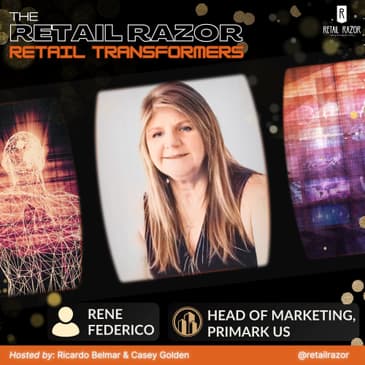
In this episode of the Retail Transformers Podcast, we sit down with Rene Federico, the US Head of Marketing for Primark, for a deep dive into Primark’s US expansion, the brand’s bold growth strategy, and why the in‑store retail experience remains the most powerful engine for customer connection.
Primark has been a global powerhouse for more than 50 years - but in the US, the brand is still in the early chapters of its growth story. Rene shares how Primark is building cultural relevance, scaling with intention, and staying true to its core promise of style, quality, and affordability without compromise.
We explore how the shift from creative‑led to growth‑led marketing is reshaping the industry. And we examine how the creator economy influences modern retail. We explain why the in‑store retail experience is still the ultimate differentiator in a world obsessed with clicks. From the new Herald Square, New York City flagship, to the immersive Primark Studio in NoHo, Rene breaks down how Primark is designing experiences that inspire, delight, and drive footfall in stores.
What We Cover
Primark's US expansion strategy for market growth
Why in‑store retail experience drives long‑term loyalty
The shift from creative‑led to growth‑led marketing
How Primark's US expansion balances style, quality, and affordability
The role of the creator economy in modern retail
The strategy behind the Herald Square flagship
How the Primark Studio builds deeper brand storytelling
The biggest mistakes brands make when scaling globally
Why This Episode Matters
If you want to understand Primark’s US expansion , how global brands scale successfully, and why physical retail is more relevant than ever, this episode delivers the insights you’ve been waiting for.
Subscribe & Follow
Don't forget to like, comment, and subscribe to The Retail Razor: Retail Transformers for more episodes featuring retail innovators, disruptors, and bold thinkers reshaping commerce.
Subscribe to the Retail Razor Podcast Network: https://retailrazor.com/
Subscribe to our Newsletter: https://retailrazor.substack.com
Subscribe to our YouTube channel: https://go.retailrazor.com/utube
About Our Guest
Rene Federico. https://www.linkedin.com/in/renefederico/
US Head of Marketing. Primark. https://www.primark.com/en-us
Rene is the head of marketing for Primark in the US, where she leads the development and execution of Primark’s end-to-end marketing strategy, ensuring consistent alignment of the brand’s strategy and values across all channels. With a roadmap to grow Primark’s US footprint, Rene and her team will lead Primark through the expansion of its brand exposure nationally and locally. To kick off her new appointment, her team developed and launched Primark's first US brand campaign, That's So Primark, to build further awareness of the brand's value, quality and style proposition to savvy American shoppers looking to fall in love with their closet over and over again. She has a deep understanding of brand dynamics and consumer engagement from working with global brands and marketplaces. With more than 20 years at Nike, Rene started in retail sales followed by roles across visual merchandising, retail marketing and brand marketing. Most recently, she joined Primark from Converse (a wholly owned Nike subsidiary) as the VP, Global Direct Marketing, where she led the global brand experience, global social media and global direct to consumer marketing strategy.
About Primark
To help shoppers find what they're looking for, Primark's website allows customers to browse its product offerings and check which products are available in their local store. Visit: www.primark.com. Shoppers can also sign up here to get email updates on Primark's latest product drops, style inspiration, store opening dates, and more.
Chapters
(00:00) Teaser
(00:57) Show Intro
(04:31) Welcome Rene Federico!
(04:52) Rene’s Retail Journey to Primark
(07:11) Marketing Shifts Today
(10:29) Primark’s US Growth Role
(12:50) Marketing for Footfall
(17:24) The Design - Value - Quality Balance
(21:07) NYC Studio and Flagship
(26:44) How Brands Make Mistakes Scaling Globally
(31:43) Brand Health and Funnel Bets
(37:06) AI Agents and Future Retail
(41:02) Agility as Your Edge
(42:51) Wrap Up and Thanks
(44:05) Show Close
Meet Your Hosts
Helping you stay sharp, be bold, and transform retail:
Ricardo Belmar is an NRF Top Retail Voice for 2025 and a RETHINK Retail Top Retail Expert from 2021 – 2026. Thinkers 360 has named him a a Top 10 Thought Leader in Retail and AGI, a Top 50 Thought Leader in Management, Careers, and Transformation, and a Top 100 Thought Leader in Agentic AI and Digital Transformation. Thinkers 360 also named him a Top Digital Voice for 2024 and 2025. He is an advisory council member at George Mason University’s Center for Retail Transformation and the Retail Cloud Alliance. He was most recently the partner marketing leader for retail & consumer goods in the Americas at Microsoft.
Casey Golden, is the North America Leader for Retail & Consumer Goods at CI&T. She is a RETHINK Retail Top Retail Expert from 2023 - 2026, and Retail Cloud Alliance advisory council member. Obsessed with the customer relationship between the brand and the consumer. Once immersed in fashion & supply chain tech, now slaying Franken-stacks & building retail tech. She is also the Founder of Luxlock, a cross-channel customer experience management platform.
Episode Music
Includes music provided by imunobeats.com, featuring Tropikool, from the album Future Beats 2, plus Virtual Apology and New Styles, from the album Shimmer Pop, written by Heston Mimms, published by Imuno.
Highlight Clips
[00:27:07] - Well, I think one of the things that there may be the potential to do is to try to scale without having built a really clear…
[00:11:41] - I think the thing for us that is the real opportunity in The US as we think about this is we operate at a place where…
[00:13:13] - At the end of the day, it really becomes about what are you optimizing for. And if there's a way to optimize for footfall in…
Transcript
S2E3 Rene Federico
[00:00:00] Teaser
[00:00:00]
[00:00:01] Ricardo Belmar: What happens when a global retail giant decides the US isn't just another market, but the next big growth engine?
[00:00:09] Casey Golden: And what does it take to deliver style, quality, and affordability without compromising any of these three.
[00:00:16] Ricardo Belmar: Plus, how do you build cultural relevance in a country where every brand is fighting for the same attention?
[00:00:22] Casey Golden: Today we're talking with someone who is not only right in the middle of this challenge, but also sees and embraces it as an opportunity.
[00:00:32] Ricardo Belmar: Primark's US Head of Marketing, Rene Federico joins us to unpack the strategy behind their massive expansion, their new flagship in Herald Square, and why in-store experience is still the ultimate growth lever.
[00:00:44] Casey Golden: If you've ever wondered how a global brand breaks through in the US and what it takes to lead that kind of scaled effort, then stay with us. The answers might be surprising.
[00:00:57] Show Intro
[00:01:05] Ricardo Belmar: Welcome to the Retail Transformers Podcast, part of the number one indie podcast network for retail, where we break down the ideas, the leaders, and the bold moves reshaping the future of retail.
[00:01:17] I'm Ricardo Belmar.
[00:01:18] Casey Golden: And I am Casey Golden. And today, oh, today is a good one. Because we're talking about a brand that has quietly and now not so quietly been rewriting the rules for value retail in the US.
[00:01:35] Ricardo Belmar: Yeah, this is one of those conversations where you realize just how much the industry has changed. Marketing isn't just about great creative anymore. It's about growth, cultural relevance, and understanding how customers actually make decisions in a world full of creators, influencers, and nearly endless choice.
[00:01:54] Casey Golden: And our guest is right at the center of that shift. We're joined by Rene Federico, the US Head [00:02:00] of Marketing for Primark. A global powerhouse with more than 50 years of history, a massive footprint across Europe and a US expansion story that's just getting started.
[00:02:11] Ricardo Belmar: Primark has been in the US for a little over a decade, but it still feels like they're at the beginning of their growth arc, even though they have 28 stores here and Rene's helping shape what the next chapter looks like from their brand new flagship opening in Manhattan's Herald Square to the Primark Studio in NoHo, it's redefining what a brand experience can look like.
[00:02:31] Casey Golden: And let's be honest, Primark is doing something most retailers struggle with. They're delivering style, quality, and affordability, without compromising any of the three. That's the triangle everyone chases and somehow they're sitting right in the middle of it and doing this all without a true e-commerce presence.
[00:02:55] Ricardo Belmar: So we asked Rene the big questions, what does it take to build [00:03:00]relevance in the US when you're already iconic in Europe? How do you market for footfall in stores instead of clicks? And this one's my favorite because, you know, stores are more important than ever. And how do you grow without losing the meaning behind your brand?
[00:03:13] Casey Golden: And she didn't hold back. We get into the creator economy. The shift from creative led to growth led marketing. Why in-store experience is still the biggest differentiator and how Primark thinks about cultural connection as the foundation for scale.
[00:03:30] Ricardo Belmar: But before we jump in, just a couple of things. A quick ask from us. If you're enjoying the show, why not give us a five star rating and review on Apple Podcasts and Spotify or Goodpods? It really helps more listeners discover the great conversations we're having here and really shows strong support for the show.
[00:03:46] Casey Golden: And if you're watching on YouTube, hit like and subscribe so you don't miss any new episodes, trailers or behind the scene clips. At some point bloopers. You never know. We might just release some [00:04:00] outtakes.
[00:04:01] Ricardo Belmar: And lastly, don't forget, the Retail Razor Podcast Network has even more great content for you. Check out The Retail Razor Show, Blade to Greatness, and Data Blades for deeper dives into leadership strategy and the data insights shaping the modern retail experience.
[00:04:16] Casey Golden: All right, let's get into it. Here's our conversation with Primark's US Head of Marketing, Rene Federico.
[00:04:24]
[00:04:31] Welcome Rene Federico!
[00:04:31] Ricardo Belmar: Rene, welcome to the Retail Transformers podcast. We are so excited to talk with you, learn from your experience, hear all the exciting things coming from Primark as you deepen your, your presence in the US.
[00:04:41] Rene Federico: Thanks so much for having me on. I'm excited to be here.
[00:04:44] Casey Golden: Yeah, it's really wonderful to have, have you on the show. I really look forward to learning more about how you're tackling the US market.
[00:04:52] Rene’s Retail Journey to Primark
[00:04:59] Casey Golden: But before we dive in, why don't you give us a bit of your background in retail and how you got to Primark. Tell us a little bit [00:05:00] about your role, and for those who may not be familiar with the brand, maybe you can give us the scoop on Primark itself.
[00:05:08] Rene Federico: Sure. So we'll, we'll, we'll end with the scoop 'cause that's the fun part. I was essentially I started my career on the retail sales floor. So I've always had a deep connection and a passion for how brands are able to connect their stories and, and connect their products to customers through retail as a platform.
[00:05:28] That was. I won't name them, but many years ago. And that was with the Nike brand where I spent the majority of my career working through various marketing roles up through not just a retail management, but on the corporate side of management. And then also spent some time with the Converse brand, which is a Nike owned brand.
[00:05:48] But always have found myself driven towards roles where I could be, in some way play a part in creating that connectedness between [00:06:00] brands and what they have to offer and customers and finding ways to kind of fuse those things together. Essentially the opportunity to come to Primark presented itself and I really enthusiastically jumped at the chance.
[00:06:13] This is a brand that has been in the United States for a, a a little over 10 years now. But still very much feels like it's at the beginning of our growth story here. And really that that sort of growth mindset was one of the things that attracted me to the brand in addition to just a global brand, an iconic brand really globally. Having been founded in, in Dublin, Ireland over 50 years ago with a really strong presence in the UK and Europe and throughout the world. And, and really the proposition we have to offer the US customer in the ability to step into a role as head of marketing, to be able to drive those strategies that, that create those connectedness, that that really is where my passion lies [00:07:00] was an opportunity that was impossible not to take advantage of.
[00:07:04] Casey Golden: Thank you, Rene. So let's dive in. As a marketing. Yes. Right. This is all the good stuff.
[00:07:11] Marketing Shifts Today
[00:07:11] Casey Golden: As a marketing leader operating at global scale, what's changed the most in how you make decisions compared to earlier in your career?
[00:07:20] Rene Federico: I mean, so much has changed and there's been so much acceleration from from both the perspective of brands and the per perspective of consumers, and not the least of which are these massive platform shifts in terms of digital acceleration, e-commerce customer expectations, and then the whole kind of globalization of the shopping process.
[00:07:41] Right. I think from a marketing and brand standpoint. The biggest shift has gone from creative driving the conversation and really to growth driving the conversation. For, again, from a marketing perspective, creative and your [00:08:00] brand story still plays an outsized role in, in marketing, obviously.
[00:08:05] But I think previously it was, it was great creative and great storytelling that would, was the beginning and end of every meeting, if you will. And now it really becomes about what is, how does marketing participate as a lever of growth in the overall enterprise? Which is an exciting shift, you know, there is something there to be said for the fact that marketing is not a tandem function. That it's actually it, key to driving enterprise growth. And, and I really love that about some of the shifts that have been making. There's, you know, and I will say in addition to that, there's also just a lot more power in some of, some of the platforms that exist around marketing, where before you used to sort of dictate strategy into platforms. Oh, here's our social media strategy. Here's our you know, me media general [00:09:00] strategy. Here's our communication strategy. So much of that is now more cyclical. And I think with the creator economy, with customers being able to have an abundance of choice, a, a lot of that.
[00:09:11] Paradigm has shifted a bit and you really do have to to listen and understand versus just project and broadcast.
[00:09:19] Ricardo Belmar: Yeah. I think that's really interesting too. Do, do you think that that's in, in part, because now there are, I guess, like a growth of more digital channels to work into how you market to a customer that, that, means you're integrating more into every marketing motion.
[00:09:37] Rene Federico: Yeah, there's not just more, but they're more powerful. I think you, right, if you look at social media, which used to be really just personal connections with people you knew or or people you were interested in their content. Those are massive commerce drivers now, right? The creator economy, the credibility that comes with working with some of these creators and influencers has [00:10:00] huge impact on brands.
[00:10:01] Some brands are built on it, really some brands are launched through that. You look at creators who ultimately become their own brands, right? Like, like Mr. Beast, for example, right? So, I think it's not just an abundance of them, but it is how powerful they are in the ecosystem of business and in the ecosystem of consumerism.
[00:10:22] And again, all of that underscored at a global scale. I think that's where the conversation gets really interesting.
[00:10:28] Ricardo Belmar: Yeah. Yeah.
[00:10:29] Primark’s US Growth Role
[00:10:29] Ricardo Belmar: And I think of it too, at Primark as a global brand, it, you must see differences from region to region, market to markets, or for example, Europe and the US probably look very different from that perspective. For you from the Primark perspective how do you look at the role the US plays in your long-term growth story?
[00:10:47] How do you see that kinda shaping the direction and, and where you're going in Primark?
[00:10:52] Rene Federico: I think we are a, a major player in the growth story. I think one, if you just look at the sort of size and scale of the US business, [00:11:00] it does represent a real, a lot of opportunity for the company in general. I think it's a different job to do. You know, I think the brand in the UK and Europe is well established, well known.
[00:11:13] And so they're looking at how can we. Everyone's growth story probably takes two avenues. You're either trying to grow the pie or you're trying to take more share of that pie, right? And I think that we probably sit more on, on the latter part of that. So, what that looks like for Europe in terms of taking more share looks a little bit different than the United States because the makeup of of retail, is a little bit different and there the challenges to get consumer attention are a little bit different. I think the thing for us that is the real opportunity in the US as we think about this is we operate at a place where delivering style, quality, and affordability is uniquely a proposition we can offer.
[00:11:59] [00:12:00] And we live at the center of that tension. And typically retailers or brands will have to find some compromise in that, whether it be promotion cycles or last season's product or different things like that. We can live squarely in the middle of that tension and offer that proposition as, as actually a new and exciting proposition for the US consumer.
[00:12:22] But there's a ton of runway here for us in the US. Part of what we've been doing is really building that awareness around what our shopping experience is. The uniqueness of being able to deliver that sort of triad of value for customers, and then also making sure we're top of mind when they are ready to shop.
[00:12:42] Casey Golden: Like most retailers you know, I, I swear so many people forget that 80% of like retail sales happen in store.
[00:12:50] Marketing for Footfall
[00:12:50] Casey Golden: Because all we ever do is talk about e-commerce, but, to, to you in-store traffic is your primary growth engine rather [00:13:00] than e-commerce. How does that fundamentally change the way you think about marketing compared to most retail brands today?
[00:13:08] Rene Federico: Yeah, I mean, to stay on, just kind of where you were leading there. Right. At the end of the day, it, it's really becomes about what are you optimizing for? And there's a way to optimize, for footfall. In the same way there's a way to optimize for clicks and so right now we're optimizing for footfall.
[00:13:25] I think that part of that generation cycle though is, and this is where I really think there's, it's an important. It's a bit of an inflection point in marketing right now because there's a lot of dialogue around bottom funnel, ROI, which is super important, right? But it does optimize towards the lowest common denominator, right?
[00:13:42] Which is just it transact, transact, transact, and it kind of leaves behind that emotional connection building and the storytelling in between there. And so. It serves a purpose, certainly. But the store experience is much more, it's a much bigger field of play, if you will when we [00:14:00] can optimize to, to, get people to, into our stores and, and think about, you know, creatively, think about how do we shorten the distance between inspiring that customer and getting them to convert.
[00:14:12] Because the default when you get into some of those lower funnel eCom channels becomes really kind of quite clear. And then you're just kind of fighting a battle amongst battles, right? Just to get those clicks. So, I think for us in addition to that, we are so proud to talk about our store experience and what, and what that has to offer.
[00:14:31] It's really grounded in an excellence that I think. You know, in, in some, in the retail space, have walked away from a little bit. They're more than happy to not deliver an exceptional experience in store at the cost of, of getting customers in other ways. I think that's not a compromise we're willing to make.
[00:14:50] So we know once we get them inspired, once we're top of mind and we can get our customer in store, they're very likely to remain a loyal customer of [00:15:00] ours.
[00:15:00] Ricardo Belmar: What do you want someone to feel when they enter the store? What's that emotional connection and feeling that you're, you're going for? Because you mentioned some things before about being in the middle of, of like, style and value and, and obviously that's a core part of the experience you want someone to feel when they come to the store.
[00:15:17] So is there a particular emotional feeling you're striving for when your customers come to the store?
[00:15:22] Rene Federico: Yeah. I would say our overarching it's just that sort of feeling of joy and that comes in a lot of ways. I think that is internalized through that individual. So it may be because, they can find everything for their family in one place that they need to get. And there's just this sort of joy of, of being able to do that and, and, and not having to not having that be a complicated process.
[00:15:44] It could be the joy of being able to afford everything you wanna get. You know, for a job interview or some other occasion that you're shopping for the joy that comes from just taking a moment to do a little bit of that sort of self-care [00:16:00] through shopping. So I think that, you know, overarching we're, we're able to kind of relay our proposition through, you know, e even just if you love your closet, there's an every day starting point from a, from just a good, joyful place that you can start from. I think that's something that we can help enable, right? And so it's, it's not just transactional, it's actually when you put something on and it gives you a level of confidence or just some other level of convenience or you're doing that for your family?
[00:16:31] I think that, that is a proposition that we're able to offer our customers. There's, like I said, a lot around the excellence in, in retail that we're able to offer, but that joyful, energetic, thoughtful experience. And around those kind of three themes around, there's style there, there's affordability, and there's quality.
[00:16:54] Gives you something you can feel really good about.
[00:16:56] Casey Golden: I mean, that is really a goal, right? I, I love the [00:17:00] emphasis on style. I feel like it's something that a lot of brands and retailers are just a lot, everything just kind of is falling flat lately. I mean, I say this while we're both wearing black casual sweater, but, but it's a holiday people.
[00:17:19] Ricardo Belmar: it's a choice.
[00:17:21] Casey Golden: It's a, some vibe.
[00:17:24] The Design - Value - Quality Balance
[00:17:24] Casey Golden: Primark is very collection led which I, I am always attracted to. I love collections. I love capsules, which put, but it puts a lot more pressure on product development. How do you evolve design and quality while still protecting the price points. I mean, this is the, these are the three triangles that it's so hard to have all three.
[00:17:45] You can get two, but you can't have three. But you guys are so, like focused on balancing these three so that a customer can get all of it. How do you guys, how do you guys manage to accomplish this [00:18:00] and how does product development is able to, to literally make this be able to go into production? Where you can get style, you can get quality, and you can afford it.
[00:18:09] Rene Federico: Yeah,
[00:18:10] Casey Golden: And when I say afford, like I hit and saw the price points of like a, a navy blue varsity jacket and it was like $35.
[00:18:18] I'm like, wait, what? I'm ready to take every single patch I own to that. I am ready to, like, we have a whole DIY project I wanna do.
[00:18:28] Rene Federico: Great. That's, that's what we love to hear. I mean, honestly, that is the exact reaction. I love to hear. The rest of the secrets are luck in a vault, we can't talk about 'em. But that, that one piece of it no, but actually we have some of the best teams in the industries that work on understanding trend market, you know, that work with our suppliers that, that work on our ability to be able to deliver that.
[00:18:55] And I think more macro, we look at that [00:19:00] sort of, we, we are confident in our proposition to say it is about style, it is about affordability, and it is about quality. There is, we will not walk away from one of those, to, and in order to make gains in another, we are truly committed to those three things. And then that is what shows up in what you just described, you know, whether it's an exceptional piece for an exceptional value in like a varsity jacket at 35 it could show up at a higher price point even too.
[00:19:29] Right? It's right. It isn't that it's, it, it is always, below a certain threshold or things like that. It is, we can, we're confident we can deliver that at. At those price points and stand behind what we're, we're able to, to deliver there. And do it at scale. And I think that's the thing that you're talking about as well.
[00:19:48] Part of that also comes from that is the actual founding principles of the company. In Ireland over 50 years ago was really about not just bringing one [00:20:00] of those things to customers, but all three of those things. And so that has been part of the DNA of what makes us who we are. The piece at the end there like, and just the excitement you get where you're like, you really almost have to check your reality.
[00:20:16] You're like, wait, what is this actually,
[00:20:18] Ricardo Belmar: Is this real?
[00:20:19] Rene Federico: to hear. Exactly. That's what we're trying to recreate in terms of the marketing and things like that is like, yes, trust us. This is a real thing. Like, yes, this is real life. And bring, bring that forward. And we, you know, using exceptional creative and storytelling, but also using you know, all those mid and down funnel tactics to be able to get people to understand that this is actually something very special.
[00:20:41] Casey Golden: I love the unwillingness to compromise. I think consumers knowing a brand's promise and seeing it backed up over and over and over again. I feel like those are gonna be the winners, you know?
[00:20:55] Ricardo Belmar: yeah, yeah. It really goes a long way towards building that kind of brand loyalty for that, because you're building [00:21:00] up on that experience of, of it's, it's like bringing in your realities to your consumer. That's one that they want. That they wanna enjoy. Yeah.
[00:21:07] NYC Studio and Flagship
[00:21:07] Ricardo Belmar: So along those lines, I guess at the time that we're recording this, we're coming up soon, I, I believe on you're opening a new flagship store in Manhattan. Herald Square, right. And, which I think in and of itself is a pretty big statement to make. And then you've also have Primark Studio location in NoHo, which is a very different kind of approach, I think, than what you're looking to do with a, a full flagship store. So, what do you, what role do each of these two locations kind of play in shaping how you show up in the market.
[00:21:36] Rene Federico: Well, they're both serve an important purpose. Like you said, the, the studio which we opened back in November was really our opportunity to add some dimension to the brand and do something a little bit unexpected. So it's not a retail space, it's more of an immersive expression of our brand to be able to invite customers into [00:22:00] and, and be more tactile and learn more about it, and do it on a, a smaller scale, a more personal scale than just, Hey, here's a shopping experience and, and, you know, here's what we have to offer.
[00:22:11] But really give more upfront interaction with our product really deepen the level of storytelling. One of the activations we did was actually "your color wheel analysis" where we had customers, I mean, we had customers lined up around the block for hours to come in and hear from experts on what colors.
[00:22:31] Again, as we're sitting here in our black sweaters, what colors look best on them? And then we were able to provide them, say, Hey, based on this, this is your color wheel. Take this with you, keep it in your wallet while you're shopping. And here's a bunch of our fall layering you know, options or offerings or capsules that you can go and shop that would look great on you, right?
[00:22:52] So it's really about a way to just to bring more of a tactile experience to the brand. Through the studio. [00:23:00] Upcoming. We have a a customization event for denim, right? Denim's a great piece. A lot of people like to keep their denim. And ours is you know, a great quality piece of denim.
[00:23:10] So we're doing denim jackets that you can come in and customize. Because denim is, is, is one of those items I think people get quite attached to and they like to personalize. So we're doing a denim customization event at the end of the month. So the studio, again, was really a brand statement. What's that?
[00:23:28] Casey Golden: I'll be
[00:23:28] Ricardo Belmar: be lining up
[00:23:29] Rene Federico: We got your, we got your invites ready? Yes. We
[00:23:31] Ricardo Belmar: Will be first in line for that one.
[00:23:33] Rene Federico: absolutely. I think the flagship at Manhattan, at Harald Square is really a signal that we matter not just in the US retail landscape, especially in, in, in that particular area. I mean, Harold Square is the US mecca of retail and, and, and the New York is the US mecca of style, right? So when you show up in in Harold Square at, at that scale that we're showing up with our flagship store, [00:24:00] it really does signal that this is a marketplace that we're really enthusiastic about. And then also that we matter in the conversation around around fashion, style and, and retail.
[00:24:12] In that, that landscape. So we're very, very excited about that opening. We're gonna celebrate quite a bit around that opening. And we're probably most excited or not probably, we are most excited about bringing our store experience at that scale to customers. 'cause it really will help land all the things that make us different and special as a retailer in this marketplace.
[00:24:35] Ricardo Belmar: Yeah, that that, that to me is also super interesting. I'm looking forward to seeing how that, how that comes to be. But I guess it also makes me think about 'cause you mentioned how that really elevates your presence in, in, in the market and really makes a statement of what you're doing and how you're showing up in the US market.
[00:24:52] And, but because you're a global brand and I, I imagine you have a number of things that you do to try to stay relevant locally in each [00:25:00] market and relevant to each local culture. How do you kind of approach that as a marketing organization?
[00:25:05] Rene Federico: Well, I think the, what's great about we working in partnership with with our team at our world headquarters in Dublin is we're, we're clear on who we are. And that is a, we are a style brand that is able to offer both quality and affordability. I mean, we're clear on that. We lead with a message of style and we back that up through how our product and our experience and all the ways we interact with customers delivers on our full proposition.
[00:25:33] So that's clear. With that, as a US team, we can move with confidence to be able to adapt where we need to. As I said in the UK and Europe, really well known brand. And so what they need to do in terms of how to build equity right is is different than what we need in the US need to do to build equity, but it all sits under the same overall narrative of what Primark [00:26:00] is and how we drive distinction in that. And so we can move with confidence to be able to address what the US consumer needs to know and hear from our brand. Based on how we've landed an overall global proposition. So yeah, I think that it would be a lot more difficult if we didn't have the same conviction coming globally for us to be able to align to.
[00:26:24] Casey Golden: Primark has, a huge presence across multiple markets. I went to college in France. I'm very familiar with Primark. I didn't realize there were any stores in the US, so my bad. Very excited that it'll be in Harold Square, especially after seeing a few items that I wanna get my hands on.
[00:26:41] Rene Federico: Love that.
[00:26:44] How Brands Make Mistakes Scaling Globally
[00:26:44] Casey Golden: But like, what is the biggest marketing mistake brands make when they're trying to scale globally? We have so many brands today that are looking to expand to Europe for the first time. So many brands have failed to enter the US. And you [00:27:00] guys have, you guys have done it. What do you think one of those big mistakes is?
[00:27:05] And how are you guys able to avoid it?
[00:27:07] Rene Federico: Well, I, I think one of the things that there, there may be the potential to do is to try to scale without having built a really clear idea of how you remain relevant. And I think that is where the, there's a potential there that the scale becomes the chase, right? So, because even if you look at the US market, there is.
[00:27:37] The size of the prize here in, in terms of apparel, however you wanna cut it up, right? If you just look at, just look at apparel sales. Take foot, take footwear out of it, take accessories out of it. Just look at apparel sales. The size of the prize in the US is massive. And I think when that becomes your focal point, then you start to lose a [00:28:00] little bit of what, what are the key building blocks to be able to get there? Because you, you, there, there could be the tendency just to chase the end game of, whatever revenue target that is or whatever piece of market share repre represents a revenue target. So really kind of building that cultural relevance.
[00:28:19] To be able to then go after those goals in a more sustainable way, right? Because it, you become meaningful. And when you become meaningful, there is inherent in that some sustainability and some, some staying power. And, otherwise, I think the risk is that, that push to scale, it kind of makes you interchangeable, which, you commoditize everything and then you become interchangeable with other brands.
[00:28:46] And so, but if you really do truly focus on, okay, how is it that we can create meaning between what our proposition is and what, who our potential customer is, then that meaning that [00:29:00] connectedness can help drive your business through the phases of scaling. If you don't do that and chase the scale, you could definitely capture that revenue.
[00:29:11] My, I guess. Watch out for that would be is you're gonna spend a lot of time trying to backtrack yourself to go regaining some of that, share or backtrack yourself to reestablishing why you should be top of mind or backtrack to reestablishing you know, what that awareness is to kind of keep you top of mind in a consumer standpoint.
[00:29:34] Now, if the goal is to be purely transactional, that can be the goal. But you know, I don't think that, I think that consumers make decisions based on different reasons. And if there isn't, if there isn't some connection or meaning for them in your brand, then you'll be forgotten.
[00:29:56] Casey Golden: You always said, like, I see a lot of like people over the last [00:30:00] like five years, like in this race to the bottom. I'm like, yeah, not a race I'm interested in running.
[00:30:06] Rene Federico: Right.
[00:30:06] Casey Golden: Sit on the sidelines, keep doing what I'm doing and like, have a little umbrella drink, like totally chasing something else here.
[00:30:15] Rene Federico: Exactly. Well, there's a little, there's a little bit of, I think there's a commitment there because we've gotten data is super important, right? And I think data as a decision making mechanism is great. I mean, data is really like an infrastructure for decision making, which is great. But it can be backwards looking, so it can put, push you in a place where you're not actually anticipating anymore.
[00:30:38] You're looking back and trying to beat the data. And then once you're beating the data, you're looking at the data. And I would say sometimes you gotta pick your head up and look at the customer. Right two and so and so, so you can see where you've been and where you're Bo going because you can't always take a 30 day dashboard and say, okay, cool, now we know what to do for the next 30 days.
[00:30:58] Right? So I think [00:31:00] that's where you get where you said, Casey, it's like this sort of race to the bottom, this like, there's this level, just level of mediocrity there that. I think puts brands at risk is just disappearing 'cause it, unless you're, unless you wanna drive relevance in the same way you wanna drive return on investment.
[00:31:21] You're to sacrifice one over the other too much if you're super relevant, but you have r no, ROI, you're not really a, you're not growing the enterprise. If you have amazing ROI and zero relevance, you can easily be replaced. I think marketing today is finding the balance between those two things in a way that is consumer centric.
[00:31:42] Ricardo Belmar: Yeah, no, that's a great point.
[00:31:43] Brand Health and Funnel Bets
[00:31:43] Ricardo Belmar: What are the kinds of metrics that you look for to help you do that?
[00:31:47] Rene Federico: You know, for us we wanna be measuring brand health in terms of how are we perceived where do we rank in terms of perception of our three, of our core proposition. And understand [00:32:00] if, if there's room there, what, where we need to kind of tailor or tweak our message, we really wanna know how we can become more top of mind.
[00:32:08] You know what you just mentioned like, I, once people know us and they start to learn a little bit more about us, we kind of got 'em hooked, so how do we make sure that we're a known entity for, in the markets that we operate in? So really quite a bit around brand health metrics.
[00:32:25] Certainly footfall and sales and other things are, are kind of like the, the long-term attributable things that we wanna drive. But right now for where we are in the US it really is to understand where does our brand sit in the mind space of, of the consumer.
[00:32:42] Casey Golden: What's a marketing bet that Primark has made that looked risky at the time, but ended up paying off. And maybe it, maybe it's not even Primark, just.
[00:32:52] Rene Federico: I, I mean this, it's gonna, you seem more elementary probably to most folks in the [00:33:00] industry, but we made a bet on the top funnel.
[00:33:03] Ricardo Belmar: Hmm.
[00:33:03] Rene Federico: And I think in a world right now that is driven with down funnel tactics we, we kind, kind of confidently and set up, came out and said, if, if we wanna deliver the bottom of the funnel, we, we gotta fill the top.
[00:33:16] We have
[00:33:16] Ricardo Belmar: Right, right.
[00:33:17] Rene Federico: store growth is slow and steady, and it's meant to be built to be durable, right? Real estate is not a fast process. Store, store fit out is not a fast process, but there's some durability in store growth in our plans for that. However it won't be fast enough to build awareness in our brand at scale.
[00:33:36] And so what we said was in order to do that, we actually have to over index, on top funnel activity. So we can start to deliver the bottom of the funnel in a more consistent way. And we've kind of, taken a look at what that is. I think, if you're reading the, the literature today, a good balance is probably 60 40 top. I even in saying [00:34:00] that, the funnel's also quite different than it was, I would say previous to some of the, you know, digital acceleration and things like that. It really is quite more horizontal than it is top to bottom because your entry points are different and then you go different ways from your entry point.
[00:34:15] And you go at them with more ease than trying to climb up to the top or fall down to the bottom. So I think just as a metaphor, but I will say that what we're able to look at was to say, first and foremost, we have to make people aware of who we are. And then we can put place, more of a focus on deepening that storytelling, deepening those connections and ultimately delivering them in store, as and actually participating in our transactional, like participating in the business with transactions.
[00:34:47] Casey Golden: It's good
[00:34:48] Ricardo Belmar: Yeah.
[00:34:48] Casey Golden: the funnel's changed so much. I mean, I don't even know what the funnel looks like right now for 2026, like. An org chart is literally flattening weekly in this[00:35:00]
[00:35:00] Rene Federico: Exactly. Exactly. And even the economies, right? There's a lot in the literature about.
[00:35:05] K
[00:35:06] Ricardo Belmar: Yep.
[00:35:06] Rene Federico: Yeah. All these different things and Exactly. So I think, and, and that's where, I mean, part of being forward looking is that you know, sometimes data is, like I said, it's where it's sort of where you've been and so, I think you have to keep in order to be forward looking, you have to be able to anticipate, okay, well how do I operate in the marketplace of today? And how is in that? And you gotta keep the consumer in your dialogue, right? How and how does that relate to the customer or the consumer?
[00:35:35] And then how does, what does that look like? And I wouldn't even say, I think a two year plan is optimistic because the change
[00:35:43] happens
[00:35:44] Ricardo Belmar: so fast. Yeah.
[00:35:45] Rene Federico: Exactly. So I think you have to look in sort of quarterly increments, but in, six months increments to make sure that you can pace up to where consumers are.
[00:35:54] Consumers are pulling brands more than I think brands are projecting on consumers and pushing [00:36:00] them forward in a lot of cases.
[00:36:01] Ricardo Belmar: way to look at it. I guess that that also is another point to make. Why, as you said earlier, to really be tracking brand health is so important because you need that. That really becomes your foundation, right? Regardless of what's gonna happen in those next one to two years, that that's the foundation you're building everything else on, no matter how flattened that funnel becomes.
[00:36:19] Rene Federico: Yes, exactly. I think anytime a brand is sitting back and saying, Hey, we're, we're driving transactions, but we're losing a sense, the, the customers are losing a sense of who we are is a very important inflection point. And so I always keep that in mind and saying, Hey. There's, what are we delivering for the business Absolutely core to, to making sure that's in, in our strategies and objectives.
[00:36:44] But how are we measuring how relevant we are to the customer? And do they, do they understand who we are? And if we starting to see that slip, we have to make sure that we are paying very close attention to that.
[00:36:58] Casey Golden: So I am famous for throwing [00:37:00] wrenches. The
[00:37:01] Rene Federico: I love it. I'm famous for catching.
[00:37:05] Casey Golden: I love that.
[00:37:06] AI Agents and Future Retail
[00:37:06] Casey Golden: So if customers start shopping through with a, through AI agents and literally delegating, not just browsing or searching, but autonomous AI agents doing the shopping on their behalf, in your opinion, like what happens to brand loyalty and marketing if we're not.
[00:37:26] Marketing to humans. And how should brands kind of like prepare for that?
[00:37:34] Rene Federico: Yeah, I think think that brand and marketing has to understand the role they play in a consumer's life and understand what it is they're able to enable for their consumers or their customers. And then being able to unlock that through whatever medium. That consumer wants to use to interact with them.
[00:37:56] And so I think it can look different for a lot of brands, and I'm [00:38:00] sure there'll be mechanisms by which you can pay your way in, and I'm sure there's mechanisms by which those consumers can dictate. This is where I want you to look or how I want you to look, or these are the principles or decision making factors which need to drive those decisions.
[00:38:15] It's price, it's quality, it's it's reviews or whatever. It's right. There's gonna be something that becomes the, the track by which that purchase happens. And I think brands are gonna have to start to think about, what role they play in the lives of their customers and how they're able to, to deliver on that.
[00:38:35] That's a big deal. I think ultimately too, the customers are gonna decide what's right for them. I mean, we've already adopted, I would say, in general, culturally letting other people shop for us. Right. Whether you do Instacart or, yeah, exactly. Even, even as early as early.com, where you say we, you may also like, even when it wasn't that smart, right.
[00:38:58] Even when it's like. [00:39:00] I'm shopping for a black sweater and they pull up something like lime green. It's like, you may like this. It's like, actually no I don't. But so even when ai, that was ai, right?
[00:39:10] Ricardo Belmar: Yeah. Yeah.
[00:39:11] Rene Federico: was coding, exactly. But even when it wasn't good, it was there. And so I think we've always been conditioned to that.
[00:39:19] Consumerism or shopping being in some way augmented in some way. And I think we've gotten more and more comfortable. I get, whether you buy a car online and have it delivered to you, whether you, you use a chat bot to help you buy insurance or whatever those things are. I think we've, there's been for.
[00:39:37] Decades, even AI is part of your shopping experience. I think what brands are gonna have to do future state is understand how they deliver their proposition through all the different platforms that are available to their customer, and then how those platforms help enable their customer to, to participate them with them in the way [00:40:00] that they want to participate with them.
[00:40:02] it should be fun. You know, I think it's, it's certainly something that is very much talked about right now and it's certainly something that I don't think any brand can operate with a future forward mindset and not be thinking about. And certainly we are. But it it's it seems like something would be a really fun challenge to, to start to
[00:40:23] Ricardo Belmar: Yeah. Yeah.
[00:40:24] Rene Federico: And at the same time really understanding too, as you think about what evolves in the role of real, tangible experiences, which I think remain very important for a very long time.
[00:40:36] Ricardo Belmar: Yeah. No, I agree. Completely agree.
[00:40:38] Casey Golden: I think we have like at least three generations on board that that's like brand experience is top of priority.
[00:40:44] Rene Federico: Exactly right. And you see that in the trends in the spending. And I think there is like something about tangible, the more things get ified, there is something about the tangibility of what brands have and even that inspirational piece, and you kind of see it all, all around [00:41:00]you,
[00:41:00] Ricardo Belmar: Right,
[00:41:00] Rene Federico: showing up. So.
[00:41:01] Ricardo Belmar: Yeah. Yeah.
[00:41:02] Agility as Your Edge
[00:41:10] Ricardo Belmar: When you think about these things in those terms and you kind of look even further out, maybe five years out, or what are the kinds of things you would say, retail brands really need to be good at that maybe they're not thinking about today that's gonna develop if it's what they're consumers are gonna judge them on.
[00:41:18] Rene Federico: Yeah, I think it's gonna be, maybe a little bit more generalized. It's gonna be agility.
[00:41:24] And I think that there is however you can operate with some sense of agility and that come, you know, whether it's your supply chain agility, whether it's your product, you know, your product, lifestyle agility, your, the agility with which you can react to trends, the agility with which you can surprise and delight customers.
[00:41:43] I think that's gonna be the thing, I think where, consumers are being trained to for, for instant gratification in a lot of ways. And whether it's through streaming services or it's through things like Instacart, same day delivery their [00:42:00] choices really have become ones of, any possibility.
[00:42:05] And so I think as a marketer, as you think about, okay, how do we, how do we serve the future needs of our customers? I think we have to start to understand what are those gonna be and make sure that we have enough agility in what we're doing to be able to deliver that for them. And of course, that's within the context of your business.
[00:42:22] It's gonna be different for us as a style brand, as it than it would be for a brand that offers some other good or service, but. I think that's gonna be one of the key, key things you know, in terms of, of being able to actually stay relevant and stay top of mind for consumers because they also, there is no, and that I've seen, there's no limit to what is being,
[00:42:45] Ricardo Belmar: Mm-hmm.
[00:42:46] Rene Federico: Kind of pushed at them in terms of like marketing, messaging, opportunity ways to participate.
[00:42:51] Wrap Up and Thanks
[00:42:51] Casey Golden: This has just been like a great session on how Primark approaches expansion. I mean, as a global brand. And how [00:43:00] brands can reach and communicate with their customers to build meaningful relationships. And not to forget about driving in-store traffic. Like that is the game, that is the business we are in.
[00:43:10] That is the bread and butter of our of every single retailer's business, you know, is that in-store traffic.
[00:43:16] Thank you Rene, for sharing your experience and, and marketing perspective with us. So appreciated.
[00:43:24] Rene Federico: Thanks so much for having me on.
[00:43:26] Ricardo Belmar: Yeah. Thanks again, Rene, for joining us today. Really appreciate you spending the time with us and sharing your knowledge and helping us appreciate how Primark is expanding and growing in the US. We're looking forward to the new flagship store. I know Casey will be first in line at the denim experience coming up.
[00:43:42] Rene Federico: Can't wait.
[00:43:43] Ricardo Belmar: Yeah. Any last thoughts that you would want to share with our audience or about either Primark or your experience?
[00:43:49] Rene Federico: No, I think o other than that, we're really optimistic about the US marketplace and, and we hope every, every listener, we hope we, we find some way to have you interact with our brand in some way.[00:44:00]
[00:44:00] Ricardo Belmar: Fantastic.
[00:44:01] Casey Golden: Rene. Ricardo. It's a wrap.
[00:44:03] Ricardo Belmar: It's a wrap.
[00:44:05]
[00:44:05] Show Close
[00:44:11] Casey Golden: How much did you love this episode? Drop us a five star rating and review on Apple Podcasts, Spotify, or Goodpods and hit that subscribe button so you never miss an update. If you're watching on YouTube, like and subscribe before you go.
[00:44:26] I'm Casey Golden.
[00:44:28] Ricardo Belmar: Follow Retail Razor on LinkedIn, Bluesky, Threads, and Instagram, and subscribe to our substack for highlights and bonus content right in your inbox. For transcripts and guest info, head to retailrazor.com.
[00:44:40] Retail Transformers is part of the Retail Razor Podcast Network. The number one indie podcast network for retail.
[00:44:46] I'm Ricardo Belmar.
[00:44:48] Casey Golden: Thanks for joining us.
[00:44:49] Ricardo Belmar: Until next time, stay sharp, be bold, and keep transforming retail.
[00:44:53] This is The Retail Razor: Retail Transformers.