


S5:E8 Prime Day Unveiled: Trends, Sales, and What Lies Ahead for Retail
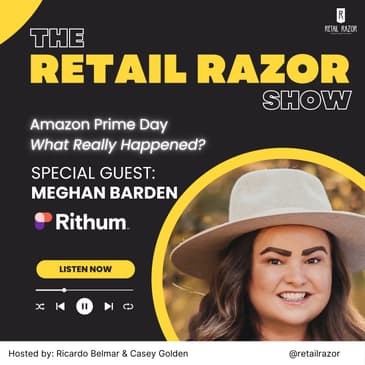
Amazon Prime Day 2025 may be over, but its ripple effects are just beginning. In this episode, hosts Ricardo Belmar and Casey Golden sit down with Meghan Barden, Director of Global Retail Media at Rithum, to unpack the surprising data and shopper behaviors that emerged — and what they mean for retail and ecommerce leaders heading into the holiday shopping season.
You’ll discover:
• 📊 Prime Day outcomes that matter — from sales spikes to category standouts, and how they compare to past years
• 🛍 Why the timing right after July 4th may have shifted discretionary spending patterns
• 💡 Meghan’s expert take on how retailers can turn Prime Day insights into Q4 wins
• 🔮 The strategic moves brands should make now to capture Black Friday, Cyber Monday, and beyond
Whether you’re a retail strategist, ecommerce operator, or simply fascinated by the biggest shopping events of the year, this conversation delivers actionable insights to help you outpace the competition.
Subscribe to our Newsletter: https://retailrazor.substack.com
Subscribe to our YouTube channel: https://bit.ly/RRShowYouTube
About our Guest
Meghan Barden - https://www.linkedin.com/in/meghan-barden/
Rithum - https://www.rithum.com
Meghan Barden is an accomplished retail media strategist with over 20 years of experience in marketing and client services in both retailer, brand and agency environments. Currently serving as the Director of Global Retail Media at Rithum, she leads the company's efforts in helping brands and retailers leverage first-party data to create personalized and impactful retail media campaigns. Her expertise spans various facets of retail media, including strategy development, media planning, and campaign optimization.
For more Amazon Prime Day analysis by Rithum, access the full report → https://explore.rithum.com/prime-day-guide-cont/prime-day-lessons-for-peak-shopping-season
Chapters:
00:00 Previews
01:01 Show Intro
10:09 Welcome Meghan Barden
10:17 Overview of Prime Day and Rithum's Role
12:20 Prime Day Anomalies and Trends
16:15 Generational Shopping Behaviors
19:20 Impact of Gen Z on Retail Strategies
24:54 AI and Authenticity in Retail
31:51 Preparing for Future Retail Events
37:59 Final Thoughts
39:11 Show Close
Meet your hosts, helping you cut through the clutter in retail & retail tech:
Ricardo Belmar is an NRF Top Retail Voices for 2025 & a RETHINK Retail Top Retail Expert from 2021 – 2025. Thinkers 360 has named him a Top 10 Retail Thought Leader, Top 50 Management Thought Leader, & Top 100 Digital Transformation Thought Leader, plus a Top Digital Voice for 2024. He is an advisory council member at George Mason University’s Center for Retail Transformation, and is the director partner marketing for retail & consumer goods at Microsoft.
Casey Golden, is CEO of Luxlock, a RETHINK Retail Top Retail Expert from 2023 - 2025, and Retail Cloud Alliance advisory council member. Obsessed with the customer relationship between the brand and the consumer. After a career on the fashion and supply chain technology side of the business, now slaying franken-stacks and building retail tech!
Includes music provided by imunobeats.com, featuring Overclocked, and E-Motive from the album Beat Hype, written by Heston Mimms, published by Imuno.
Transcript
S5E8 Decoding the Hidden Truths Behind Amazon Prime Day
[00:00:00] Previews
[00:00:01] Meghan Barden: So it was right after 4th of July. I think that's an interesting timing because ultimately people may have spent their discretionary spending over that holiday weekend, right? Whether that's shopping, traveling, et cetera. And then they go into Prime Day and they may not have had that discretionary spending that they typically had the week following.
[00:00:17] Think cleaning, home decor, even those items were actually kind of on the up and up. Previous to other years, I think people were again, using that, that spending and those sales really mindfully given this kind of economic state that we're currently in.
[00:00:32] So, some trends like that I think are interesting to see, as well as what we discussed was the overall average order value dollar amount went down year over year. So last year I believe it was closer to almost $60, and this year we saw $56.
[00:00:48] Lean in there, and continue to tell that story and ring that bell and stop trying to be everything to everybody. Because I think that's just ultimately too fragmented of a strategy and you're not going to end, end up [00:01:00] necessarily having the wins you think you would.
[00:01:01] Show Intro
[00:01:01]
[00:01:13] Ricardo Belmar: Welcome to season five, episode eight of The Retail Razor Show, the only retail podcast in the Top 10 All Time Indie Management podcast charts on Goodpods. And, the highest ranked retail podcast in the Top 100 Indie Marketing podcast charts on Goodpods.
[00:01:28] I'm Ricardo Belmar.
[00:01:29] Casey Golden: And I am Casey Golden. Welcome Retail Razor Fans to retail's favorite podcast where we cut through the clutter to give you sharp insights on what's happening in retail today, tomorrow, and where we get real about what's driving the future of retail.
[00:01:46] Ricardo Belmar: So Casey, I have a very important question for you to kick us off.
[00:01:51] Casey Golden: You don't say, why does it seem like every time you have a question for me to kick off, you're gonna like throw me under the bus?[00:02:00]
[00:02:04] Ricardo Belmar: It's a thing.
[00:02:08] It's a thing we do. It just is.
[00:02:10] Casey Golden: bring it, bring it. What do
[00:02:11] Ricardo Belmar: All right, so here it is. So inquiry minds wanna know, did you buy anything this year during Amazon Prime Day?
[00:02:18] Casey Golden: I didn't, and, and frankly I didn't even hear about it except for scheduling this. I was like, oh, wait, when's Amazon Prime?
[00:02:26] Ricardo Belmar: That, that's how often you track sale events, isn't it?
[00:02:29] Casey Golden: I'm really not a sales
[00:02:30] Ricardo Belmar: You're not a sales shopper.
[00:02:32] Casey Golden: I'm not, but , I have always. Kind of primed, like one big purchase on Black Friday,
[00:02:38] one big purchase on Amazon Prime Day.
[00:02:41] I get that one thing on my wishlist that it's just like, okay, let's get it.
[00:02:46] It doesn't hurt as bad. , But I don't even remember seeing an ad or anything. I've been on amazon.com.
[00:02:53] Ricardo Belmar: Mm-hmm.
[00:02:53] Casey Golden: I've been in my inbox. I mean, I, I got new pens,
[00:02:57] Ricardo Belmar: Yeah.
[00:02:58] Casey Golden: but I don't remember even [00:03:00] seeing an
[00:03:01] Ricardo Belmar: and it was twice as long this year. It was like a four day, almost a week long event. Maybe it was so long that it got, unnoticeable. We may hear more
[00:03:08] Casey Golden: don't know, maybe they just decided like, I'm just not the market.
[00:03:12] Ricardo Belmar: It could be you're not their preferred customer anymore.
[00:03:14] Casey Golden: I am not a preferred customer, not not anybody's preferred customer. I could be
[00:03:19] Ricardo Belmar: You could be. You could be.
[00:03:21] Casey Golden: I'm a preferred pain in the ass !
[00:03:22] Ricardo Belmar: That's a topic for another show.
[00:03:30] Well, I did buy a couple things during Prime Day. I'm probably more their target shop, target shopper for that, but in fact, there were two furniture pieces for my, home office slash recording studio here that I'm remodeling. I'd actually been looking at those things for many months now, and I just wasn't ready to buy them earlier.
[00:03:48] So I let them sit in my, Amazon wishlist. And then it got close enough that I thought, oh hey, Prime Day's coming up sooner or later, so I might as well wait and see if they get cheaper. Then I'll buy
[00:03:58] Casey Golden: Yeah, I mean, that's a great purchase, [00:04:00] right?
[00:04:00] Like furniture, electronic, maybe new tv, maybe more. New monitors, home office. Great time.
[00:04:08] Ricardo Belmar: Yep, yep. I'm a very well-trained shopper for, for that kind of thing. So I guess that makes me the Prime Day target for that since I was waiting. I think I was waiting for a couple months before I did that. But, to be fair, it wasn't just 'cause I hoped they were cheaper.
[00:04:20] Like I said, I wasn't ready to put them in the room yet earlier, so it makes sense for me to buy earlier. But, . I will say that apart from me, there were many other purchases in my household during Prime Day. Not just at Amazon, as we're gonna find out with today's guests. It seemed like all of retail was doing a sale during Prime Day week, Target, Walmart, even Best Buy had a sale and, and I think across our house, so we bought things at all of those stores. So it really did seem like a, a Christmas in July kind of thing. With, uh, the sales going on that week. Now we even bought things for back to school stuff. My son's going off to college this fall, so we've started all of that shopping [00:05:00] and stocked up on things, for his dorm room on Amazon too.
[00:05:03] So that was a, a timely event for us.
[00:05:06] Casey Golden: Yeah, Amazon must love you. All those milestones and mouths to feed.
[00:05:13] Ricardo Belmar: Yeah, exactly.
[00:05:18] That's another episode discussion too.
[00:05:21] Casey Golden: Yeah, I know.
[00:05:21] Ricardo Belmar: come back to this week's, this week's episode.
[00:05:23] Casey Golden: I was just talking to somebody and I'm like, yeah, I don't even buy regular toothpaste. I'm like, my toothpaste isn't even on Amazon.
[00:05:31] Ricardo Belmar: One of these episodes, we're gonna figure out what the, who Casey is, the target shopper for.
[00:05:36] Casey Golden: I know, right. Let's talk about this episode.
[00:05:39] Ricardo Belmar: Let's see. How about this episode?
[00:05:42] Casey Golden: I love this discussion because one, I learned something,
[00:05:46] Ricardo Belmar: Mm-hmm.
[00:05:46] Casey Golden: but. It's all about the data. And what happened during Prime Day. Was it a success? Was it a win for Amazon or a win actually across all retail? How do [00:06:00] Target, Walmart, Best Buy, and all the other retails. I'm hearing Nordstrom, that
[00:06:05] Ricardo Belmar: Nordstrom's anniversary sale.
[00:06:07] Casey Golden: Special sales that same week. How'd they all perform?
[00:06:11] Ricardo Belmar: Yeah, well this is a first for us. We've never really spent time covering prime day events before on the show in any meaningful detail, but we had an excellent opportunity, to work with the incredible team at Rithum to help us paint a picture of what happened. In terms of sales, I think more importantly, in fact, even than the sales figures, which actually were pretty hard to come by, it seems this year, as we're gonna find out.
[00:06:34] Uh, but what were the
[00:06:34] Casey Golden: Amazon covers prime
[00:06:36] Ricardo Belmar: We didn't even get data from Amazon on their own Prime Day success. But, what does that really tell us, right? For retail? Because the fact is it's Prime Day was in July. It's August now, but that means holidays coming up. We've got plenty of other shopping holidays left in this calendar year.
[00:06:51] So what should retailers learn from that? How should they adapt? And, always fun to look demographically, especially with Gen Z as we've said [00:07:00] many times this season on the show, like what is up with Gen Z and how they shop, and how should retailers get their attention and convert them.
[00:07:07] Casey Golden: I mean, I don't know how many times a season that we're gonna mention, you have to pay attention to Gen Z and really focus on what makes them different, if you wanna be successful in converting them. Right?
[00:07:18] there's so many changes in retail right now. Pay attention. Gen Z.
[00:07:23] Ricardo Belmar: Exactly. Exactly.
[00:07:24] Casey Golden: millennials like, we're good. We'll roll with it.
[00:07:27] Ricardo Belmar: exactly. So today we have Meghan Barden from Rithum, joining us to help us answer all of these super important questions. Some quick background on Meghan. She's an accomplished retail and media strategist. With over 20 years of experience in marketing and client services and retailer brand and agency environments.
[00:07:48] She's currently serving as the Director of Global Retail Media at Rithum, where she leads the company's efforts in helping brands and retailers leverage first party data to create personalized and [00:08:00] impactful retail media campaigns. Her expertise spans various facets of retail media, including strategy development, media planning, and campaign optimization.
[00:08:09] Casey Golden: She already sounds like our new bestie.
[00:08:11] Ricardo Belmar: I know, right? This is why it's so exciting for us. And for those of you out there who aren't familiar with Rithum, they are the world's connected 3P commerce network. For over two decades as Commerce Hub and Channel Advisor, they led the industry with modern third party commerce capabilities. Now they joined as one company, Rithum, providing an end-to-end platform and network capabilities to create more durable, sustainable e-commerce businesses to 40,000 of the world's leading brands, suppliers, and retailers powering more than 50 billion in annual gross merchandise value. So it's no wonder they're able to deliver a rich data analysis on this year's Prime Day based on that massive customer base they serve.
[00:08:56] So should we jump right into our conversation with [00:09:00] Meghan?
[00:09:00] Casey Golden: Before we do, you know what I'm gonna say
[00:09:02] Ricardo Belmar: Mm-hmm.
[00:09:03] Casey Golden: Take a quick minute to ask our wonderful listeners and amazing viewers on YouTube and Spotify because we are now posting video on Spotify. We want you to please drop us a five star rating if you like the show in Apple Podcasts, Spotify, Goodpods. Hit that thumbs up on YouTube and smash that bell to subscribe. Your amazing support really means a lot to us, truly helps us improve and grow the show and drop us a review. If you're willing, we'd love to hear from you.
[00:09:38] Ricardo Belmar: A hundred percent. That is so right. Thanks Casey, for the quick ask for everyone to please drop that rating and review. So with that said, let's now jump right into our conversation with Meghan Barden, Director of Global Retail Media at Rithum, and learn all about this year's Amazon Prime Day results and takeaways.
[00:09:58]
[00:10:04] Welcome Meghan Barden
[00:10:04] Ricardo Belmar: Welcome, Megan to the Retail Razor Show. We are really excited to have you here to give us the rundown on this year's Prime Day and related shopping events for that week across retail.
[00:10:14] Meghan Barden: Thank you so much for having me. I'm really excited to be here today.
[00:10:17] Overview of Prime Day and Rithum's Role
[00:10:17] Casey Golden: This is our first year covering Prime Day and really diving into not just the sales data around what happened, but really looking at what it means for retail for the rest of the year and the remaining shopping holidays coming up. Especially when we look at this through the lens of Gen Z and millennial shoppers.
[00:10:38] Ricardo Belmar: Yeah, and we're really thankful you and the team at Rithum for pulling this together, coming on the show and share these results and outcomes with us. So Megan, why don't we kind of level set a little bit, ask you to talk to us about, both what your role at Rithum is, what Rithum is all about, and what you've learned through your clients and what really did happen during Prime Day Week.
[00:10:58] And I keep wanting to call it Prime Week [00:11:00] 'cause it really didn't, it was like a week this year after so many days. Right. And personally, I just anecdotal, I find it interesting that we seem to have a little bit of a lack of actual data reported this year about Prime Day's success, whether directly from Amazon or even others compared to past years.
[00:11:16] Meghan Barden: sure. Happy to go into that. So, I'll start with an intro. So I'm Megan Barden. I'm the Global Director of Retail Media at Rithum. Rithum is a e-commerce solutions company. We were previously Channel Advisor and Commerce Hub, they merged about a year and a half ago, and we are now Rithum. So we support over 40,000 brands and retailers in all e-commerce solutions.
[00:11:38] So think marketplaces management, drop ship support, inventory management, as well as digital marketing and retail media management. So I oversee the team that conducts retail media and digital marketing management. So we almost act as like a internal agency on behalf of our clients, and we approach retail media with a commerce injected [00:12:00] strategy first type of approach.
[00:12:02] So yeah, when we were looking at Prime, we were looking at it from both a organic perspective, meaning the marketplace's, management of which products our clients were going to choose to have on sale the year this year. And then also from an advertising paid perspective of which campaigns we were going to be running and pulsing up for this extended event.
[00:12:20] Prime Day Anomalies and Trends
[00:12:20] Meghan Barden: So, I wanna get into a couple of like outlier factors that happened this year that are different from last year kind of anomalies. So the first of which is that Amazon moved up the Prime day event. So typically it's that second week, or sorry, the third week in July this year was actually the second week.
[00:12:35] So it was right after 4th of July. I think that's an interesting timing because ultimately people may have spent their discretionary spending over that holiday weekend, right? Whether that's shopping, traveling, et cetera. And then they go into Prime Day and they may not have had that discretionary spending that they typically had the week following.
[00:12:50] So I think that's an interesting factor, number one. The second new variable was that they extended the sale from two days to four. And I think as we discussed previously, [00:13:00] the factor of assuming that because the sales extended, the sales and total GMV expected would also extend, was not necessarily the case, at least from what we saw in the industry, as well as for on behalf of our clients.
[00:13:12] So I think that's something to consider in future sales events. I'm very curious to see if they continued to have the four days and then also if they decide to change the timing at all in October this year, since there's always that second event, and maybe bring it closer to Black Friday, Cyber Monday timeframe. Or if they keep it in October, and then also looking forward into 2026, are they going to keep that same timeframe in July as well?
[00:13:36] So there's a lot of different factors to consider that we saw for our clients. Anecdotally, what we saw overall was that certain categories are always going to be a standout. I think electronics are typically one that's a big winner for the sale. But also what we saw this year was some home staples and just kind of standard home supplies, right?
[00:13:52] Think cleaning, home decor, even those items were actually kind of on the up and up. Previous to other [00:14:00] years, I think people were again, using that, that spending and those sales really mindfully given this kind of economic state that we're currently in. So they were looking for sales on some of their everyday basics which is kind of different from previous years.
[00:14:12] So, some trends like that I think are interesting to see, as well as what we discussed was the overall average order value dollar amount went down year over year. So last year I believe it was closer to almost $60, and this year we saw $56. So not just for our clients, that was for Amazon overall.
[00:14:30] So again, just kind of interesting to see some of these trends where I think Amazon anticipated a increase in an upwards flux, and ultimately we saw a decrease in certain areas.
[00:14:40] Ricardo Belmar: Interesting. Yeah, I know. I was like anticipating that the fact that they extended to the four days and kind of doubled up on that would just add that much more momentum and get more people to buy even more things just because it kept going and going. So it's interesting you're saying that, you know, that that doesn't seem to have been the effect.
[00:14:55] Meghan Barden: Yeah, and I think the four days, honestly, people were even more mindful of how they were spending. [00:15:00] I think they what we saw on our end was the first day kind of an initial spike of spend, right? People had maybe previously built their cart, knew some items that they knew they wanted to transact on, and then they took those next two days kind of in the middle of the sale to continue some researching.
[00:15:13] We saw a downward trend those two days flat, if not down in overall transaction figures, but. What we saw was people were adding to cart and not finishing their transaction. So again, that research, let me add this to cart and check things out kind of mentality. And then that final day of the sale, they said like, okay, this is in fact something I actually wanna purchase.
[00:15:32] I will make a second purchase. And we saw some data around that as well that people were doing two purchases. The first one being larger than the second. And ultimately overall over average order value as we discussed, was down. But I think it's interesting that people were kind of, navigating those four days in that way.
[00:15:48] Casey Golden: What do you think that that tells us about how people are approaching sales events differently now? Had it been one day there, there wouldn't be this four days of decision making maybe talking themselves [00:16:00] out of an impulse or choosing to buy that first item that is more expensive, on that splurge, and then saying like, well, I have a couple more days, so like, let's just let's get something else.
[00:16:12] You know, what are you, what are you thinking on that?
[00:16:15] Meghan Barden: Yeah.
[00:16:15] Generational Shopping Behaviors
[00:16:15] Meghan Barden: Number one, I think shoppers are just becoming generally more savvy when it comes to sales. They're weighing the options across different retailers, different environments, and much more research heavy than prior years or just even prior generations if we're looking at Gen Z versus some of the older generations.
[00:16:32] Number two, there was so much more competition this year. So Amazon Prime Days, four days, week,
[00:16:37] Casey Golden: Wait a minute. Am I like an older generation here?
[00:16:43] Meghan Barden: I know I'm
[00:16:44] Casey Golden: Are we there yet?
[00:16:45] Meghan Barden: millennial, I take offense. Yeah. But there was much more competition. So Prime Day was smack dab right on top of Target Circle Week, as well as Walmart's big sale week, and then also Nordstrom's anniversary sale. So some top retailers were [00:17:00] also running their big annual or semi-annual events.
[00:17:03] During the exact same timeframe. The other thing we saw is that brands were running their own sales to counteract and drive people back to their own.com. So, I got several text messages from brands that I subscribed to saying, Hey, we're running a 20% sale. You know, they wanna have people drive to their own dot com rather than Amazon to kind of avoid that Amazon fee.
[00:17:22] So I think brands and shoppers are getting more savvy about just the overall timeframe and how to navigate the, the prime event.
[00:17:30] Casey Golden: They don't want it just to be it's not just about Prime Day is not just about Amazon anymore. Uh, it sounds like a lot more of the retail industry is participating in, in building strategies around this. Do you think it's a, it's a permanent campaign. That's going into a lot of retailers, or should be going into retailers, strategy books, going into this for next year.
[00:17:55] Meghan Barden: Absolutely. I mean, when we're managing brands, we're always earmarking those times of the year [00:18:00] for increase in budget. We're always planning for it and we're thinking strategically about how to navigate and looking at year over year figures to see where we could have learnings and ultimately be agile from previous years wins and losses for that matter.
[00:18:13] So. That's always something that we are earmarking in our budgets and I think retailers are doing the same. As soon as Amazon launches those dates of when the prime day event will be, retailers and other brands are acting accordingly and adjusting. And so I think you're right. It's much more of just like an overall sale event, not just people driving to Amazon.
[00:18:32] And you know, historically, Prime Day was you know, kind of a surprise. People didn't know what it would happen. They would get less lead time when it was happening. It was obviously a shorter timeframe. I think the sales were a little bit more compelling in terms of percentage off. I don't think we're seeing some of that same excitement.
[00:18:50] And so the shoppers, like I mentioned, are, are getting fatigued and getting more savvy and weighing their options when it comes to how they're shopping the event.
[00:18:57] Ricardo Belmar: Yeah. And you mentioned earlier, [00:19:00] generational differences. So if we focus a little bit on, on Gen Z for a minute, it, it seems like, are they, is Gen Z not responding as much as other generations of this sort of, the countdown deal or in the way that other generations are used to responding to and should...
[00:19:13] Do retailers need to rethink how they plan and promote this sort of big sales event if Gen Z is a major target for them.
[00:19:20] Impact of Gen Z on Retail Strategies
[00:19:20] Meghan Barden: A hundred percent. Yeah. So Gen Z is this top emerging purchase group that is going to have immense buying power. I believe it was forecasted the top purchase group by 2030. Right. So. That is a generational group that brands and retailers alike need to be more mindful of and ready to support. Gen Z is the first fully digitally native group, right?
[00:19:43] So they have always had access to internet in hand their entire lives, which is such a crazy concept to even
[00:19:49] Casey Golden: Poor things.
[00:19:50] Ricardo Belmar: Yeah.
[00:19:50] Meghan Barden: I know. So overwhelming. I can imagine. And because of that, they are a skeptical group. They are researchers. Right. They are looking into not only [00:20:00] what is the best deal, but what brands do they identify with?
[00:20:03] They're coming at it from a much more personal perspective. They're looking to connect with brands on an overall brand story. They're looking for authenticity. They're looking for the details of how things are made, where they're made , the types of ingredients. Or items in contained within the product.
[00:20:19] And they're just ultimately kind of much more of a skeptical group in a certain way. And when they transact it's after much research and ultimately weighing out the options. So I don't think they react as excitedly and maybe as, kind of like immediately to sales the way that some of those other generational groups historically have.
[00:20:39] So we've been having a lot of conversations internally about how to target Gen Z because they are going to be such a different group. Um, and our brands need to be ready.
[00:20:47] Casey Golden: Well, one of the things that they've definitely led on is the whole buy now pay later movement, which is just. Even if they're gifting for other people [00:21:00] even if it's household and not like large purchases. Some of them, in my opinion, some of the most ridiculous consumable purchases that, as a geriatric millennial I was told you never charge. Right. Like it was ingrained on how you use credit growing up. But they're looking at a lot of this as managing cash flow,
[00:21:23] Meghan Barden: Mm-hmm.
[00:21:24] Casey Golden: and they don't look at it as credit or whatnot. It's, it's the price to pay to manage cash flow. And maybe it's less about the sale and it's more about their cash flow. Um, which is a very big difference from the previous, the older generation where you know, we essentially grew up and charge it,
[00:21:45] Meghan Barden: Yeah.
[00:21:45] Casey Golden: know, credit, credit, credit, credit, credit. But don't put consumables on a credit card. Otherwise, mom's gonna get mad. She like, she taught you better than that, right? Anything on a credit card should still be living [00:22:00] somewhere in your home.
[00:22:01] Meghan Barden: Right. Yeah, I know. No, I completely agree. I think again, that generation, they're looking at their overall pocketbooks, not just reacting you know, so quickly to an initial sale. And if they are using some of those act now, pay later situations like a Klarna or an Affirm, I think they're being mindful about when those payments are due for them. And in that instance, like what interest is happening, right? There's so many different options now where you can avoid interest altogether, which is great. And I think it's, it's interesting to see as this new buyer group emerges, the types of ways that they are transacting that is different to some of those older generations.
[00:22:38] Casey Golden: Yeah.
[00:22:39] Would Gen Z, I know, with Gen Z expected to reach 12 million in spending power. How are they influencing performance at big retail moments like Prime Day?
[00:22:51] Meghan Barden: Yeah, so, I think the figure is 12 billion, number one, not million.
[00:22:57] Casey Golden: Oh.
[00:22:57] Meghan Barden: but also, yes, so. I [00:23:00] think, again, as I mentioned, they're looking for much more of a connection, right? From brands and retailers alike. They're not just looking for the percentage off or the steep discount. So I think that's why they're also responding to a certain degree to social content creators and people who are telling like a very authentic story of how they're interacting with brands. So I think social content creation and overall, like influencer marketing is something that Gen Z responds to, but they can also sniff out someone that's not authentic. So the authenticity factor of a brand and a social creator and making sure that there's alignment in that partnership is something that's very important to them.
[00:23:38] I think we've all. Probably followed certain content creators in the past, and you see them pedaling a, a product that you're like, that does not make sense at all. Gen Z will sniff that out in two seconds. Right. So they're, they're very selective and loyal to the people that they trust the most. And also in their own research, they're also, you know, kind of phoning a friend, right?
[00:23:57] They're making. Group decisions about some of [00:24:00] those purchases and trusting the friends around them rather than just, oh, this retailer is having a sale, I'm going to act accordingly. So again, what we're trying to inject for our brands is taking a look at some of those organic elements that inform product descriptions, titles, making sure you have the right imagery, that's not too staged, things that are more authentic, and how the product is being used in the imagery.
[00:24:23] As well as video. So Gen Z is a very like video heavy user generation, how they're consuming their information. So having video integrated in any type of organic or paid component is hugely valuable.
[00:24:35] Casey Golden: Yep. So just fact checking myself, gen Z is expected to reach 12 trillion
[00:24:42] Meghan Barden: Oh, trillion I was wrong too.
[00:24:44] Casey Golden: 2030, so.
[00:24:45] Meghan Barden: Okay. Trillion with a T.
[00:24:48] Ricardo Belmar: Yeah. That makes them like the biggest purchasing power generation in history, I think.
[00:24:52] Meghan Barden: Absolutely. Yep. Yeah,
[00:24:54]
[00:24:54] AI and Authenticity in Retail
[00:24:54] Casey Golden: The, the data shows like Gen Z continually prioritizes trust [00:25:00] and authenticity over urgency or deep discounts. What does this mean for how retailers engage with them during promotional campaigns and I'd love to know your thoughts on how do you think AI content will impact that.
[00:25:16] Ricardo Belmar: Hmm.
[00:25:17] Meghan Barden: Hmm, that's a good question. Yeah. So again, I think telling the story of each brand and as a retailer is going to be very critical. So, for example, I'm thinking Amazon, you know, they do a lot of, charitable work as well as efforts to make sure that they're like delivering in like a green way for the planet, right?
[00:25:36] Like reduced footprint type considerations. I know I'm seeing the new Amazon Prime vans that are, you know, electric, things like that. So they're making some considerable decisions and changes in how they manage commerce. I think Gen Z responds well to that type of effort, right? Because they are a very socially and environmentally conscious group.
[00:25:56] So again, being authentic in your overall story as a retailer or a [00:26:00] brand, keeping in mind and not, and promoting if possible. The lack of environmental footprint that your product or brand may have on the environment and any way that you can promote being green or being good for the environment, obviously that's a plus.
[00:26:15] And then again, any type of integration of the content that Gen Z is looking for the most, which would be authentic video. The content that is going to be speaking to the most is instilling trust, authenticity and ultimately something that they're looking to connect with.
[00:26:31] When it comes to ai, it's gonna be really interesting. Right now we're leveraging some AI in some test pilots right now in terms of just campaign overall management, like some tool tip areas in which it's reading through data and flagging if a campaign needs to be paused or looked at or maybe increased in budget just based on data that's running through the dashboard.
[00:26:52] We're also looking at some agentic AI shopping opportunities and some piloting with clients. I know that I [00:27:00] personally am on ChatGPT as an elder millennial daily for, you know, not only shopping questions, but also like, Hey, find me the most recent discount or promo code on a particular retailer.
[00:27:12] Rather than going and searching for it myself or going to the exact website. I think Gen Z is going to be smart in how they're using ai, but also, again, skeptical. They're gonna sniff out when something doesn't feel authentic. And I think the integration of AI needs to be very thoughtful, right?
[00:27:28] Still telling a unique story while being efficient if possible.
[00:27:33] Casey Golden: like right now, I mean, I can definitely see more authenticity because there has been no scaled out monetization plan, but as soon as that monetization plan hits I think it's gonna be really interesting to see how authentic anything is once we know what the monetization strategy is. I keep finding myself running to Reddit [00:28:00] because I feel like it's like the last place I can find out.
[00:28:02] I'm like, okay. Give it to me. Who's used it? Who hates it? Who loves it? What's, what's the deal? Is anybody talking about this? Because I just, I don't know what's ai, don't I'm everybody's an influencer and I'm like, I just, my friends haven't bought it. I asked, we all have a, a group chat, right? That's sitting on our phone where we can ask a bunch of friends, like phone a friend.
[00:28:25] Meghan Barden: Yep. Exactly. And that's credit, right? That's your community of millions of friends that you can get an authentic take from. I do think Gen Z is doing the same thing again, really relying on that community, um, of research and authenticity of the story. Have you used this? What was your experience? I know people are also, they're very reliant on like product reviews.
[00:28:48] They go to a product on Amazon or wherever else and immediately scroll down to the reviews, right? And they're looking for images, they're looking for video and like a full testimony. As transparent as possible, um, of [00:29:00] integration of that product.
[00:29:01] Ricardo Belmar: So one of the things I find is interesting when we talk about all these kinds of activities to guide our shopping we typically have in mind more high consideration purchases where, you know, you, you worry more about the reviews and more about doing the research to make sure you have the right product in that category.
[00:29:15] But I, I'm curious, like for this year's prime day, it seemed like household essential products seemed to outperform. If you look across the different categories like apparel and electronics, even if they didn't have very significant discounts. So why do you think those are the items that won out this year?
[00:29:31] Meghan Barden: Yeah, honestly I was looking at some figures from numerator and some of the top items were Dawn Platinum Power Wash, Liquid IV packets, right? Like Amazon Basics, paper plates. Um, I think people are stocking up for summer essentials to get them through the rest of the summer and their particular, events or needs there.
[00:29:50] And then also going into the, the school year with maybe some back to school considerations early if they can think through it, but. I think the big driver of that ultimately is [00:30:00] our, unreliable economy at this point. I think people are being more mindful of their spending if they have discretionary spending.
[00:30:07] They're weighing the options and looking into more deeper reviews and research of those bigger purchases. And then they're also taking advantage of these types of sales, and again, weighing the percentages off like, Hey, Dawn, Power, Power Wash. I typically buy that at Costco, right? The four pack or whatever.
[00:30:24] But if it's actually on sale at Amazon for cheaper, I'm gonna get it there even if I don't necessarily need it yet. I think also there's this trend lately of having like the back stock, like having kind of a stock up of some of your day, day to day. As long as it's like obviously shelf stable.
[00:30:38] I think some people are taking advantage of sale moments to make those types of purchases and like you were saying earlier, weighing out the overall cash flow and kind of pocketbook. And less responding to just the fact that it's a sale, but more so weighing out the total spend and where they can grab the best deal.
[00:30:55] And I think that's probably overall all purchase groups, not necessarily just [00:31:00] Gen Z. I think people are just being more savvy with their dollars at this point as we continue into sort of an unknown, right? With where we are from an economic status.
[00:31:09] Casey Golden: Yeah, well, I mean, I'll always advocate that like an educated and conscious consumer is better for the industry regardless of how it impacts your business today. It's better for everyone.
[00:31:22] Meghan Barden: Yep. I completely agree with that. Yeah. And I think, there's nothing sometimes better than just like having something in your cart and you see that it's on sale or Amazon's pane of like lowest price in 30 days or whatever that looks like and going like, okay, purchase now. But there's also just a time to say like, okay, these are my essentials.
[00:31:39] We typically do a monthly or semi-monthly purchase. I'm gonna get them now ahead of time because they happen to be on sale and it makes most sense for me from a financial perspective.
[00:31:49] Ricardo Belmar: Yeah, absolutely.
[00:31:50] Meghan Barden: Yeah.
[00:31:51] Preparing for Future Retail Events
[00:31:51] Casey Golden: Based on what we're seeing like this summer. What's your advice for retailers preparing for Labor Day, holiday sales, other big [00:32:00] shopping moments that, anniversary essentially.
[00:32:05] Meghan Barden: Yeah, so I think number one, it seems like everything is extending right? It used to just be Black Friday, then it's Cyber Monday. Then all of a sudden we're calling it internally, like that whole week BFCM week, right? So those sales are extending, they're starting earlier maybe in that Thanksgiving week all the way through Cyber Monday and into the next week.
[00:32:25] So things are going longer. I think people are, again slowly but surely weighing out their purchases and monitoring and then making those final purchases at the last minute when the the sale may be ending or the price or percentage off is the steepest. But these are annual events that our, our team is preparing our brands for constantly, like I mentioned earlier, when we're looking at their annual budgets, we're always earmarking these times of year to make sure that we are prepared for that increase in spend and making sure that we have compelling product launches to also associate, right? You don't wanna just have like the same products over and over on [00:33:00] sale. You need to make sure that you're launching new things as well. So that's also part of it. But as we go into this back half of the year and if the economic spending trends continue the way that they are, again, I would say people are going to be leveraging these sales for the basics.
[00:33:14] I think people may be monitoring their spending in their pocketbooks more wisely. And brands and retailers need to be mindful of that when they are putting those sales together and selecting the products that they are going to prioritize in their messaging the most.
[00:33:31] Ricardo Belmar: Yeah, that, that makes sense. I agree. Definitely. I think there's, we're likely to see more that more cautious consumer and then retailers have to adjust and plan ahead for that, knowing that that's what's what they gonna be dealing with. So let, let's continue to look ahead. We've touched on a, a few points on what impact AI is having both in terms of the authenticity with Gen Z and agentic AI shopping tools.
[00:33:53] We've talked a little bit about impact of influencers on these shopping holidays. If we keep looking forward, out towards this year's [00:34:00] holiday season and, and knowing that consumers are likely to be a little bit more cautious. What are some of these additional, retailers really need to focus on and think about, and I'm particularly thinking about, if the consumer's gonna be more cautious, they may lean more heavily into these AI tools to help them both with the research, finding the best deals, that sort of thing.
[00:34:20] Casey Golden: Product categories,
[00:34:22] Ricardo Belmar: exactly
[00:34:23] right. so so what are retailers, yeah.
[00:34:26] What do retailers need to do about that this year to to have a successful holiday season?
[00:34:30] Meghan Barden: Yeah, I think from my perspective, retailers need to hone in on what they do best, where they are most authentic, and what categories perform the best for them. I, I'm thinking at top of mind for me is like Target for example, they've done such an incredible job with like their interiors, their home decor.
[00:34:48] They are really singing in some of these categories where other big box retailers have not necessarily had as much success. They have one P and three P sellers with a lot of inventory, but Target has made [00:35:00] some of those interior collaborations with Studio McGee, Hearth and Hand, really authentically theirs.
[00:35:05] And year over year people are so excited to see what's launching in each season. So that is so authentically stand out to Target just as one example. So I think big retailers and small retailers alike need to lean into what does most authentic to them and stop trying to be everywhere, right?
[00:35:22] Like, let's be mindful of where you're putting your efforts as a retailer. What authentic story you're trying to tell with products that most align to you as a retailer. And then on the other side of the coin, brands need to be doing the same. I think there's historically been this strategy that brands need to have their products across all retailers from a one P or three P perspective. That may not always be the case.
[00:35:46] We're looking at some of our clients right now that are across some of these top big box retailers and we're weighing out the pros and cons of like, should we continue efforts here, or is this kind of considered like a keep it running evergreen [00:36:00] moment, and there's other areas in which we're leaning into more of a launch and a grow perspective because that's where the consumer tends to live in certain categories. So I think that's what retailers and brands alike need to consider is, especially for Gen Z. Where are you most authentic? Where are you seeing the most success?
[00:36:15] Lean in there, and continue to tell that story and ring that bell and stop trying to be everything to everybody. Because I think that's just ultimately too fragmented of a strategy and you're not going to end, end up necessarily having the wins you think you would.
[00:36:29] Ricardo Belmar: Yeah, it really is about
[00:36:30] Casey Golden: is, is hard. It just turns into noise.
[00:36:32] Ricardo Belmar: Yeah. Yeah.
[00:36:34] Meghan Barden: And that's so much of what this prime sale was, in my opinion, was just so much over consumption and overwhelming noise. Right? Like.
[00:36:40] Ricardo Belmar: Mm-hmm.
[00:36:41] Meghan Barden: It just, it gets to be too much. And I think especially as consumers are minding their spending they've become overwhelmed and honestly take like further steps back.
[00:36:50] Right. They don't wanna participate at all because it's just too much.
[00:36:52] Ricardo Belmar: yeah, yeah. Brands really need to look at how they're connecting with those customers, not just giving them a discount, but how are they being [00:37:00] relevant to them to really win over that purchase.
[00:37:02] Meghan Barden: Yeah. And I think gone are the days of just like getting your product out there in front of everyone, right? All eyeballs. Right now it's much more of a considered approach. Like for example, like we're looking at the key audiences for our brands that are like the top audiences, and then creating lookalikes, right?
[00:37:19] Based on those character attributes that are the top audience. We're not necessarily trying to get in front of everyone. That's honestly a waste of dollars, right? We wanna be mindful, so we're trying to get. The right message out to the right people at the right time. And then we're also looking at like products that bring people in, what's considered the gateway product to our brand.
[00:37:37] And then putting that product out in front of new to brand customers to hopefully bring them in because it's had success elsewhere doing that before. So again, those are just like some, like very measured strategy pieces that we're taking into consideration to hone in on our approach in the day to day so that we we're as mo as, as mindful as possible for our brands.
[00:37:56] Ricardo Belmar: Yeah. Yeah. No, a hundred percent. A hundred percent.
[00:37:59] Final Thoughts
[00:38:02] Ricardo Belmar: Well, Megan, this has been a really illuminating discussion. We're always big fans of leveraging and diving into the data to see what we can learn and be, hopefully become more predictive, more prescriptive about what's coming next. I wanna really thank you so much for joining us today and sharing all of these incredible insights on Prime Day.
[00:38:14] Meghan Barden: Yeah, thank you so much for having me. I've really enjoyed it. I can always dive into the elder millennial. Cohort there. But yeah, thank you again for having me. This has been great.
[00:38:25] Casey Golden: Really appreciate being able to dive into Prime Day performance. This was our first time. And I'm sure our fans and audience had so many takeaways from this discussion because it wasn't talked about much. Um, and
[00:38:40] Meghan Barden: been, yeah, it was really interesting to what, to see what, if anything, Amazon put out, right? Like their, their post blog, post post Prime blog post was, it was a top event, but there's no data included. I find myself being skeptical, but it was an exciting time because so many different variables were different this year, and so it was, [00:39:00] it's definitely been interesting to kind of tear it down and see what happens.
[00:39:02] Casey Golden: Yeah. Well, I'm sure we'll be asking you to come back again next year.
[00:39:06] Meghan Barden: Oh, I hope so. I would love that.
[00:39:08] Casey Golden: Ricardo. It's a wrap.
[00:39:09] Ricardo Belmar: It is.
[00:39:11] Show Close
[00:39:16] Casey Golden: If you enjoyed our show, we have a simple ask. Please consider giving us a five star rating and review on Apple Podcasts, Spotify, or Goodpods. Remember to smash that subscribe button in your favorite podcast player. Like, and subscribe to our YouTube channel so you don't miss an episode.
[00:39:34] As always, a huge thank you to our amazing Goodpods listeners for helping us consistently rise to the top three spots in Indie Management and Indie Marketing Weekly and Monthly podcast charts with every episode.
[00:39:49] I'm Casey Golden.
[00:39:50] Ricardo Belmar: Please follow us and share your feedback at Retail Razor on LinkedIn, Bluesky, Threads or Instagram. And if you wanna preview highlights and transcripts from each episode right in your [00:40:00] email inbox, please subscribe to our Substack Newsletter.
[00:40:03] The Retail Razor Show is the original show in the Retail Razor Podcast Network.
[00:40:08] I'm Ricardo Belmar.
[00:40:09] Casey Golden: Thanks for joining us.
[00:40:10] Ricardo Belmar: Until next time, keep cutting through the clutter and stay sharp.
[00:40:14] This is the Retail Razor Show.
[00:40:15]